
Aluminium Ute Trays in Australia: Tub Removal, Sizing, Payload and What a Good Tray Really Costs
Author: EZ Toolbox Date Posted:16 September 2026

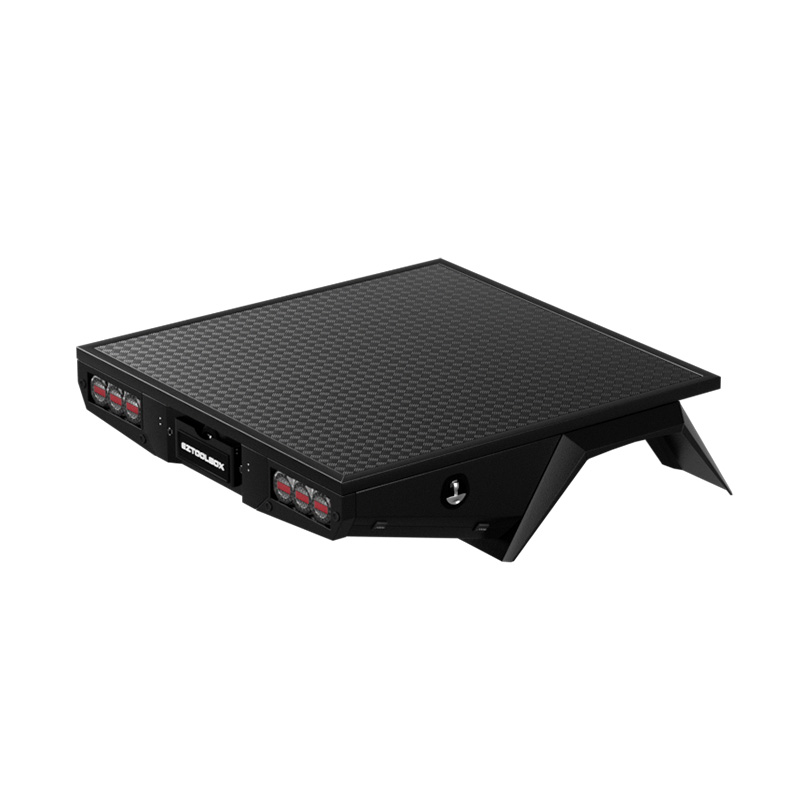
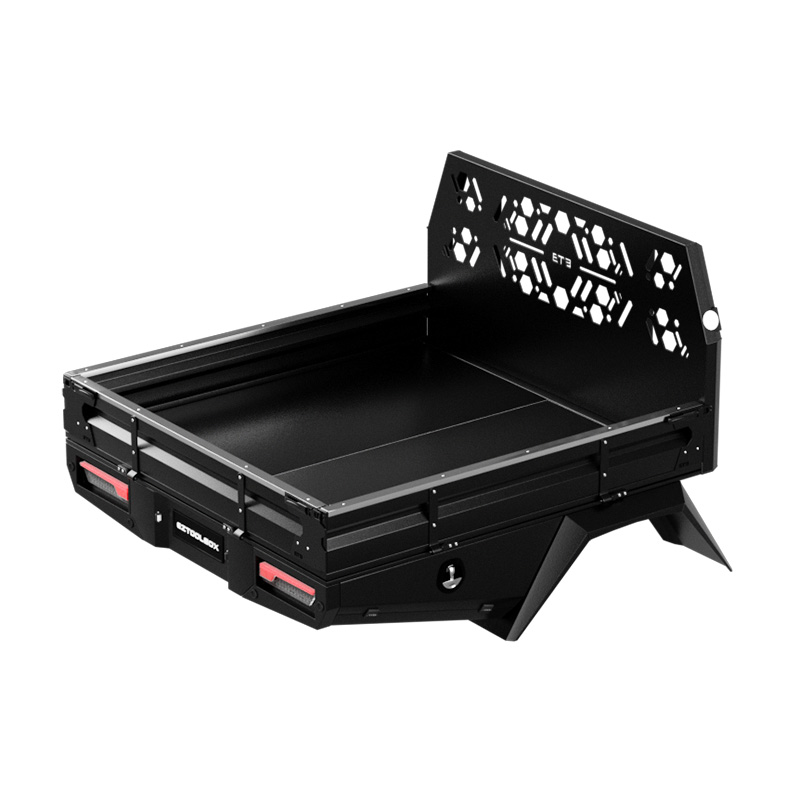
For a dual-cab, the standard answer in Australia is a 1600–1850 mm aluminium tray with drop sides and a headboard, and a trundle drawer if you carry long gear. Aluminium over steel is not a style choice — a fitted steel dual-cab tray runs roughly 250–380 kg against roughly 100–180 kg for the aluminium equivalent, so the swap hands back around 100 kg of legal payload immediately. Expect roughly $3,499 for an 1800 mm black aluminium tray, around $4,999 for an 1800 mm tray with a trundle drawer, and $6,250–$7,750 for a premium Xceed tray. Full range: ETB Aluminium Ute Trays, backed by a lifetime structural warranty.
What this guide covers
- Why people remove a perfectly good tub — and when they should not
- Tray anatomy: deck, headboard, drop sides, gussets, under-tray space
- Sizing by cab type, and the numbers that decide whether a canopy will fit later
- Steel vs aluminium, honestly — including where steel still wins
- Payload, axle loads and the compliance points that actually get checked
- 2026 Australian prices by size and configuration, including full-set and Xceed
- Fitting, warranty and where to see trays in person in VIC, QLD and NSW
Why replace the tub with a tray?
A factory tub is shaped for a showroom, not for work. Wheel arches eat the floor, the sides are fixed, the load height is high and nothing bolts to it without drilling through paint. A tray fixes all four problems at once.
- Flat, square, usable deck. No wheel arches. A standard pallet, a stack of plasterboard sheets or a full sheet of ply sits flat.
- Three-side access. Drop sides mean you load from wherever the forklift, the crane or the wheelbarrow happens to be.
- A mounting platform. Toolboxes, canopies, ladder racks, water tanks and jack-off legs all bolt to a tray properly. On a tub you are compromising.
- Under-tray volume. The space between the chassis rail and the mudguard becomes storage — under-tray boxes or a full-width trundle drawer.
- Repairability. Dent a tray and you replace a section. Dent a tub and you are in a panel shop discussing colour match.
When should you keep the tub? If the ute is primarily a family vehicle, if you only need weatherproof lockable storage (a hard lid or tub canopy is far cheaper), or if you are leasing and the vehicle must go back standard.
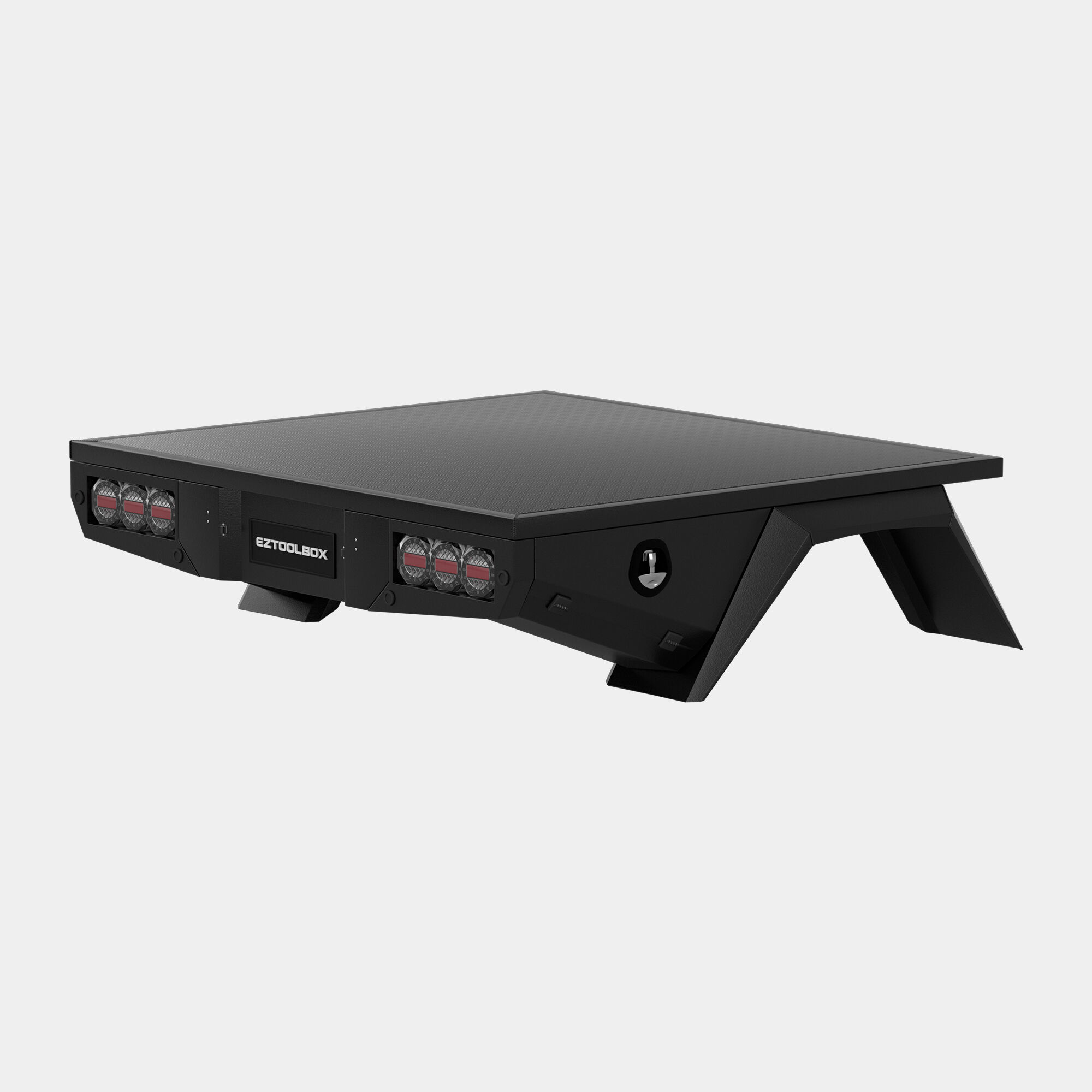
Tray anatomy: the seven parts worth understanding before you quote
| Component | What it does | What to look for |
|---|---|---|
| Deck / floor | Carries the load. | Plank or sheet construction, thickness, and whether the planks are extruded (stiffer) or folded sheet. |
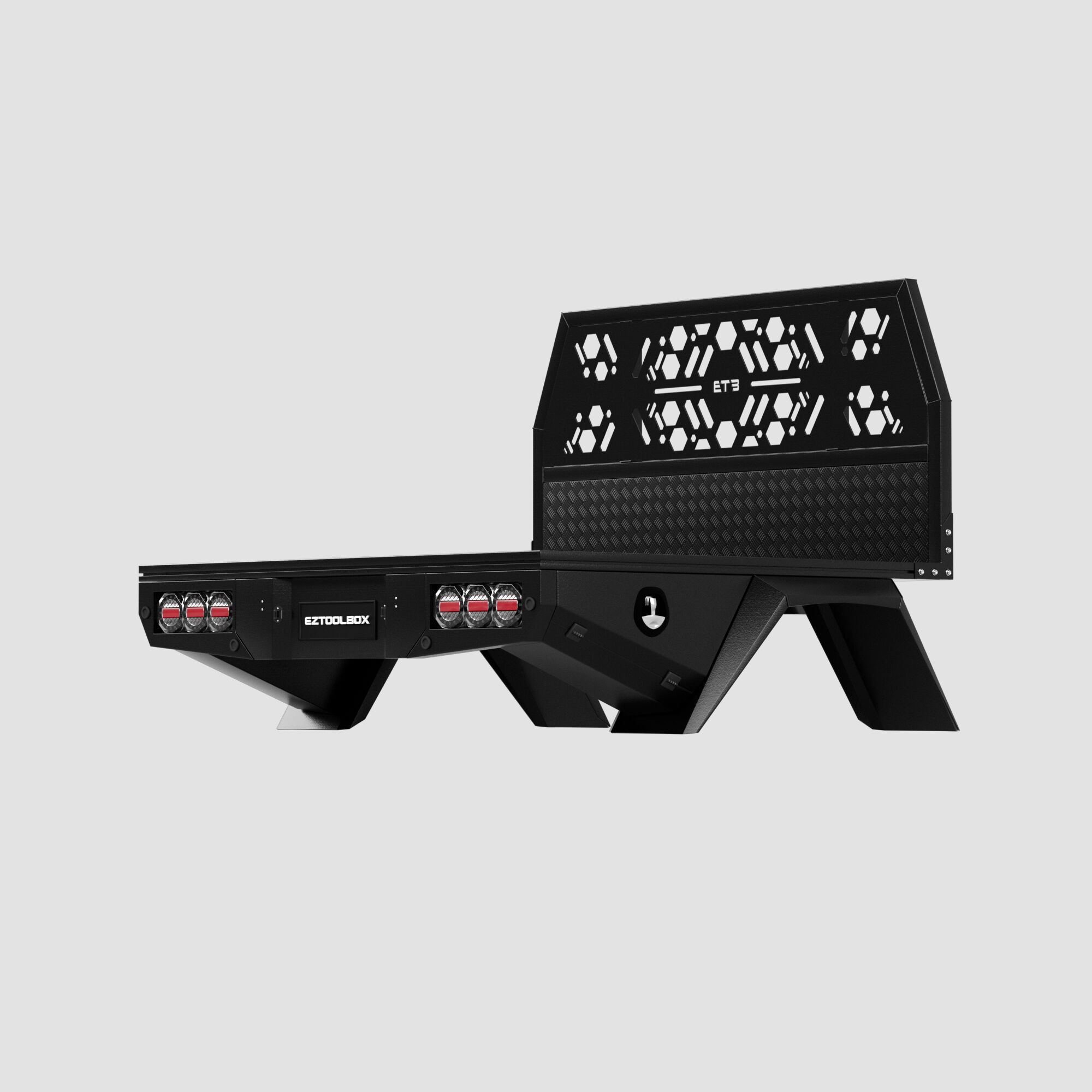
| Headboard | Protects the cab and stops the load coming forward. | Height, ladder-rack compatibility, and whether it is bolted or welded. A load-restraint component, not a styling item. |
| Drop sides | Contain the load; drop for access. | Hinge type, latch quality, and whether sides are removable. |
| Under-tray frame | Mounts the tray to the chassis and supports boxes. | Bearer spacing and whether it is drilled for under-tray boxes or a trundle drawer from the factory. |
| Gussets / corners | Stop the tray racking on corrugations. | The single best predictor of how a tray looks after five years of dirt roads. |
| Trundle drawer | A full-width drawer rolling out of the under-tray space. | Slide rating, locking, and dust sealing. |
| Mudguards | Cover the wheels. | Steel, alloy or plastic; alloy wheel arches suit a black build. |
Headboard or no headboard?
A headboard costs a few hundred dollars and does three jobs: it stops a shifting load coming through the rear window, it gives you a ladder rack mounting point, and it stops gravel and mulch from a tipped load ending up on the roof. Unless you have a specific reason to run an open front, buy the headboard.
Sizing your tray
Tray length is dictated by your cab type and by what you plan to put behind it. The common Australian sizes:
| Cab type | Common tray lengths | Typical width | Range |
|---|---|---|---|
| Dual cab | 1600, 1650, 1800, 1850 mm | 1780 – 1800 mm | Dual Cab Trays |
| Extra cab | 2100, 2150 mm | 1780 – 1800 mm | Extra Cab Trays |
| Single cab | 2400, 2450 mm | 1780 – 1800 mm | Single Cab Trays |
| LandCruiser 79 | 1850 mm dual cab, longer for single cab | Model specific | Trays for Toyota LC79 |
| Premium / heavy duty | 1700, 1900, 2100, 2400 mm | Model specific | Xceed Trays |
Three measurements that decide your build
- Deck length. Sets what you can carry flat, and how much canopy you can fit. A 1600 mm tray will not take an 1800 mm canopy plus a usable open deck — decide the canopy at the same time as the tray.
- Deck width. Australian trays are usually 1780–1800 mm wide, deliberately sized around a standard pallet.
- Deck height above the chassis. Determines under-tray box clearance, load height for manual handling, and how the vehicle looks. Lower is better for your back and your centre of gravity.
Plan the whole build in one sitting. The most expensive mistake in this category is buying a tray, then discovering that the canopy you want, the trundle drawer you need and the water tank you planned cannot all coexist. Sketch the full layout before you order anything — or price a matched tray and canopy package from $4,999.
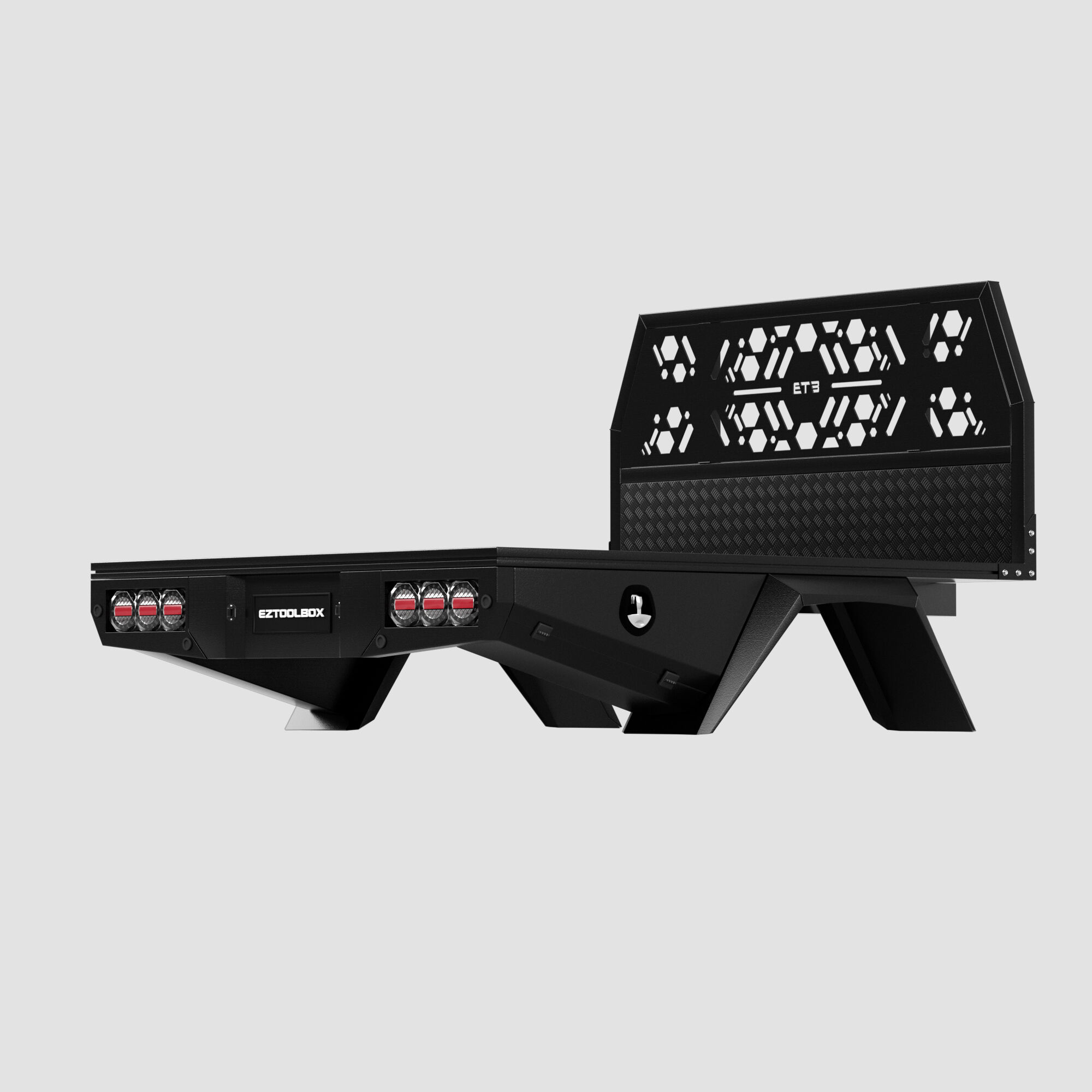
Steel vs aluminium: the honest comparison
| Factor | Aluminium tray | Steel tray |
|---|---|---|
| Fitted weight (dual cab) | approx. 100 – 180 kg | approx. 250 – 380 kg |
| Effect on payload | Returns roughly 100 kg of legal payload | Consumes it |
| Corrosion | Self-protecting oxide layer; no paint required | Needs paint or galvanising; rusts from every drilled hole |
| Purchase price | Higher | Lower |
| Repair | Specialist TIG work; section replacement | Any workshop with a stick welder |
| Impact behaviour | Dents and can crack under severe point load | Bends and can be beaten back |
| Resale | Strong — holds value and can be re-sold separately | Weaker, especially once rust has started |
| Best suited to | Payload-limited utes, coastal and touring use, most trades | Extreme abuse, hot-work industries, low-budget farm hacks |
The honest summary: steel is cheaper to buy and cheaper to fix, and if you are loading scaffold and dropping steel offcuts on the deck every day there is a real argument for it. For almost everyone else — and certainly for anyone whose payload is already tight, which is most modern dual-cab owners — aluminium is the better long-term purchase.
Payload, tare and the compliance numbers that matter
A tray conversion changes your vehicle tare mass. That has three consequences.
1. Your payload changes on paper as well as in practice
Payload is GVM minus tare. Under the Australian Design Rules, tare is measured with fluids topped up but only 10 litres of fuel and no accessories — which is why brochure payload always reads better than the real world. After a tray conversion, get the vehicle weighed and work from the real figure. Reference: NHVR mass, dimension and loading. Note that 4.5 tonnes GVM remains the line between light and heavy vehicle in Australia.
2. Rear axle load and overhang
A longer tray moves load rearward. You can sit comfortably under GVM and still exceed the rear axle rating. Keep heavy, seldom-used items forward of the axle line, and be realistic about what a full water tank at the back of a 2450 mm tray does to steering feel in the wet.
3. Load restraint is still your responsibility
Drop sides contain a load; they do not restrain it. The performance requirements are set out in the NTC Load Restraint Guide and enforced in every state. Rated tie-down points, correct straps and a headboard are the practical implementation.
Vehicle standards background: Department of Infrastructure and Transport. Worker safety around load height: Safe Work Australia.
What aluminium ute trays cost in Australia in 2026
Prices are GST inclusive, supply only, and current at the time of writing. Fitting and tub disposal are additional.
| Tray | Price | RRP | Best for |
|---|---|---|---|
| Black aluminium tray 1600 mm | $3,499 | $3,900 | Dual cab, standard build |
| Black aluminium tray 1600 mm + trundle drawer | $4,599 | $5,150 | Dual cab, long gear |
| Black aluminium tray 1800 mm | $3,499 | $4,100 | Dual cab, longer deck |
| Black aluminium tray 1800 mm + trundle drawer | $4,999 | $5,400 | Dual cab, maximum storage |
| Black 1650 mm tray with headboard | $3,899 | $4,450 | Load restraint + ladder rack |
| Black 1850 mm tray with headboard | $3,899 | $4,650 | Longer deck + headboard |
| Black 1850 mm tray + trundle drawer | $5,190 | $5,750 | Full-spec dual cab |
| Black 2150 mm tray for extra cab | $4,190 | $5,500 | Extra cab |
| Black 2150 mm + trundle drawer (extra cab) | $5,490 | $6,800 | Extra cab, full spec |
| Black 2450 mm + trundle drawer (single cab) | $5,790 | $7,100 | Single cab, maximum deck |
| LandCruiser 79 black 1850 mm, colour-matched doors | $4,899 | $5,250 | LC79 owners |
| Black full-set tray 1650 mm | $4,799 | $5,450 | Complete set |
| Black full-set tray 1850 mm + trundle drawer | $5,990 | $6,950 | Complete set, full spec |
| Xceed full-set tray 1700 / 1900 mm | $6,250 / $6,450 | $6,750 / $6,950 | Premium build |
| Xceed full-set tray 2100 / 2400 mm | $7,750 | $7,950 | Premium, long deck |
| Aluminium 1780 × 1600 mm tray with under-tray boxes | $3,915 | $4,350 | Tray + storage in one |
| RAM 1500 tray and toolboxes setup | $8,685 | $9,650 | American trucks |
Finance: Afterpay and zipPay at checkout, plus Shift and Humm90 for business purchases. A tray is frequently a deductible business asset — check current thresholds with your accountant or at the ATO.
The trundle drawer: the best value upgrade on a tray
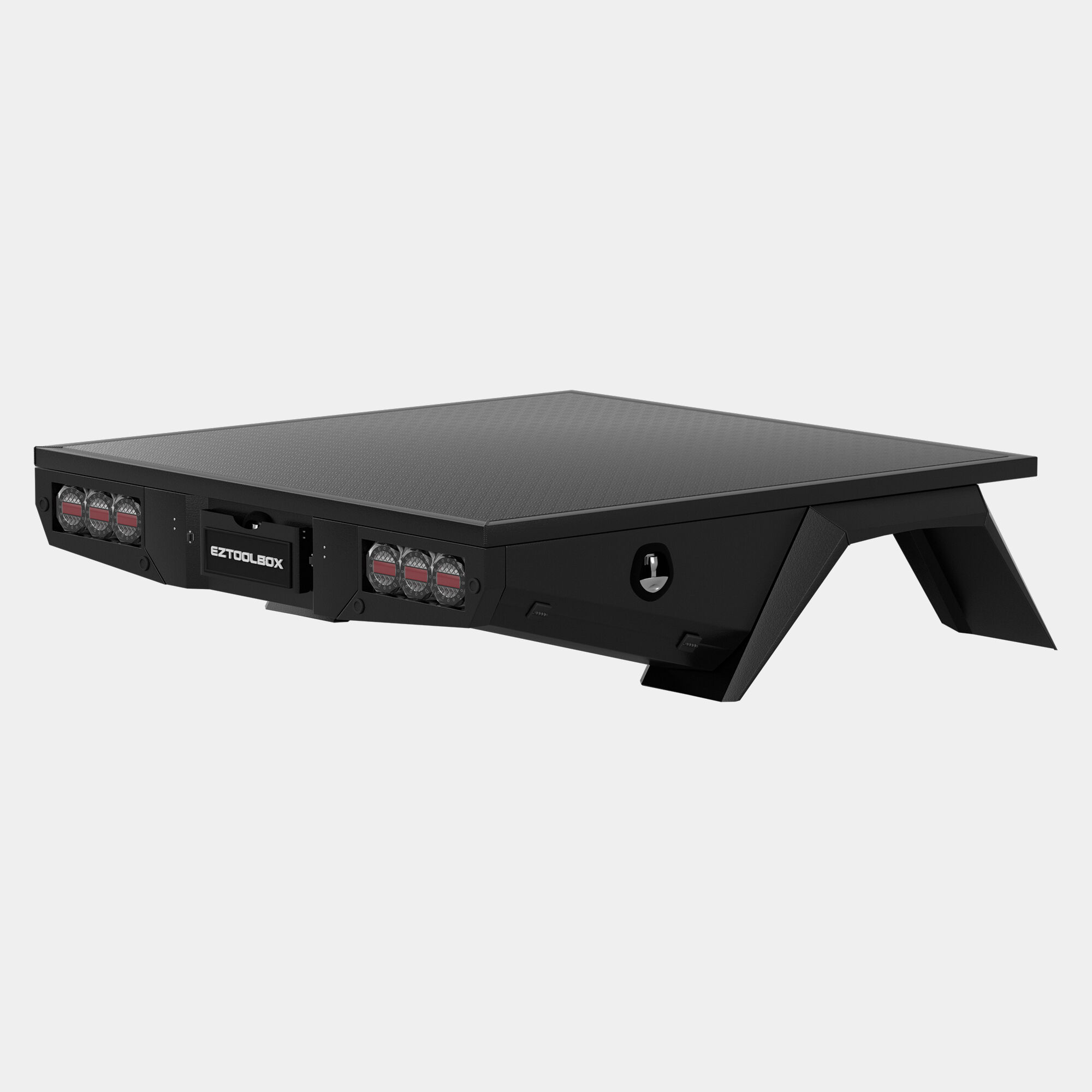
A trundle drawer turns the dead space under the tray floor into a single full-width, full-length storage run on heavy-duty slides. It costs roughly $1,100–$1,300 as a tray option and does three things nothing else does:
- It swallows long items. Star pickets, conduit, levels, fishing rods, awning poles — the things that never fit in a box.
- It brings the load to you. You pull the drawer out at hip height instead of climbing onto the deck and crawling to the headboard.
- It keeps the deck clear. Which is the whole point of having a tray in the first place.
If you are ordering a tray and you are undecided, order it with the drawer. Retrofitting is possible — see Trundle Drawer — but specifying it up front is cheaper and fits better.
Fitting, downtime and warranty
What happens on fitting day
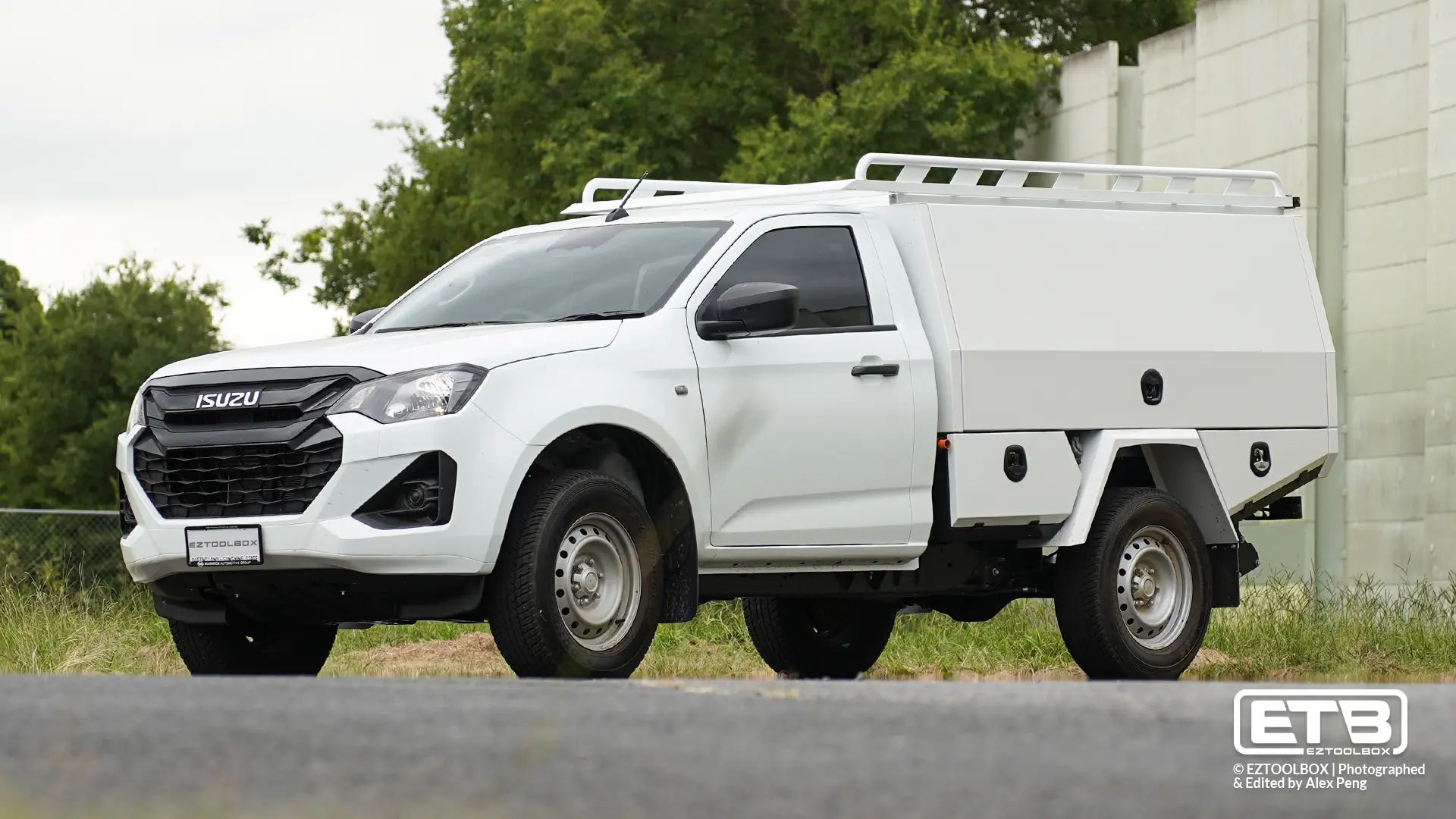
- The tub is removed — tail lights, loom, fuel filler and bolts. Keep the tub if you might ever sell the ute standard; a complete tub is worth real money second-hand.
- The sub-frame is mounted to the chassis and the tray is fitted and squared.
- Lighting and the loom are re-terminated to the tray lights, and the number plate and fuel filler are relocated.
- Toolboxes, canopy, drawer and accessories are fitted and the whole build is checked for clearance at full suspension travel.
Budget a day for a straightforward tray fit, longer if a canopy and a 12V fit-out are going on at the same time. Book it for a week you can afford to be off the tools.
Warranty and consumer rights
Our ute tray range carries a lifetime structural warranty — a meaningful signal, because structure is exactly what fails on a badly built tray. Separately, buying from an Australian business with an ABN means the ACCC consumer guarantees apply and there is a local entity to enforce them against.
See the trays in person
Nationwide enquiries: 1300 710 666. Completed builds by vehicle: Our Gallery — HiLux N80 and N90, Ranger PX, Next Gen and Super Duty, D-MAX, BT-50, Triton, Navara, Amarok, LandCruiser 79, RAM 1500 and 2500. ABN 59 611 265 779.
Frequently asked questions
How much does an aluminium ute tray weigh?
Roughly 100–180 kg fitted for a dual-cab tray, against roughly 250–380 kg for the steel equivalent. Adding a trundle drawer, headboard and under-tray boxes pushes the number up, so ask for the specific figure for your configuration if payload is tight.
Do I need engineering approval for a tray?
A compliant tray fitted to a standard chassis by a competent fitter generally does not need individual approval, but the finished vehicle must comply with mass limits, lighting, rear marking and load restraint requirements. Check your state roads authority if the build is unusual — long overhang, chassis extension or a GVM upgrade.
What size tray fits a dual cab?
1600–1850 mm is the normal range, usually around 1780–1800 mm wide. Choose 1600–1650 mm for a tidy turning circle and easier parking, 1800–1850 mm if you carry sheet material or want a longer canopy.
Can I keep my tub and put it back later?
Yes, and you should keep it if the ute may be sold standard or returned at the end of a lease. A complete tub with lights and loom has real resale value; a damaged or partially stripped one has almost none.
Will a canopy from another brand fit an ETB tray?
Usually, if the mounting pattern and deck width match — but tolerances, rail positions and jack-off clamp spacing vary. Buying tray and canopy together removes the risk and is normally cheaper; see Tray & Canopy.
Is a trundle drawer worth it?
For anyone carrying long items, yes — it is the highest-utility option on the order form. For someone carrying only boxed hand tools, under-tray toolboxes may serve better and cost less.
How long does a tray fit take?
Allow a day for a straightforward tray. Add time if a canopy, drawer, 12V system and accessories are being fitted in the same visit.
Does a tray affect fuel economy?
A lighter aluminium tray can slightly improve economy against a steel tray, but the bigger factor is what you then bolt to it. A tall canopy changes frontal area and that is where highway fuel actually goes.
Can I claim a ute tray on tax?
A tray fitted to a work vehicle is normally a deductible business asset, and may fall under an instant write-off threshold depending on the year and your turnover. Confirm current rules with your accountant or at the ATO.
What is a full-set tray?
A complete package — tray, headboard, drop sides and the mounting hardware — rather than a base deck you then option up. Full-set pricing starts around $4,799 for 1650 mm.
Key takeaways
- A tray is the platform decision. Everything else — canopy, boxes, drawer, racks, tanks — bolts to it, so decide the whole build before you order the tray.
- Aluminium hands back roughly 100 kg of legal payload against steel. On a modern dual-cab that is not a luxury.
- Buy the headboard. It is load restraint, ladder mounting and cab protection for a few hundred dollars.
- Specify the trundle drawer up front if there is any chance you will want it.
- Weigh the finished vehicle at a public weighbridge and work from that number, not the brochure.
- A lifetime structural warranty and three Australian showrooms are the practical answers to “what happens in year five”.
Next step
Browse all aluminium ute trays, look at the premium Xceed trays, price a matched tray and canopy package from $4,999, or send your vehicle details through Custom Build. Melbourne, Brisbane and Sydney showrooms — or call 1300 710 666.