Chassis Mount Canopy for LandCruiser: The Complete Buyer's Guide

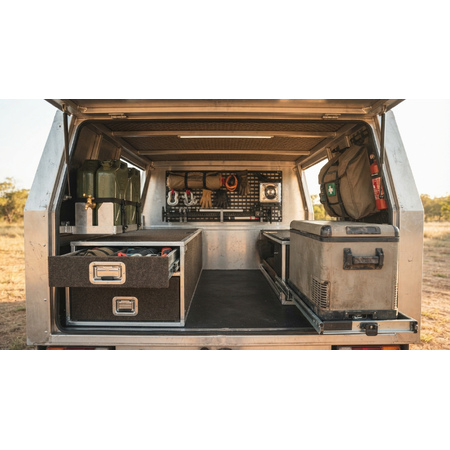
TL;DR
A chassis mount canopy for LandCruiser is bolted directly to the vehicle's chassis rails rather than sitting on a separate tray, giving it a stronger, more integrated connection that suits heavy touring, off-road, and load-carrying setups. This style of canopy is popular among LandCruiser owners because it handles chassis flex better, offers a cleaner overall look, and supports heavier accessories like drawer systems, water tanks, and roof racks. This guide covers how chassis mount canopies work, why they suit the LandCruiser platform so well, and what to consider before choosing one.
Quick Answer
A chassis mount canopy for LandCruiser is a canopy design that attaches directly to the vehicle's chassis rails, rather than being mounted on top of a separate tray structure. This approach is particularly well suited to LandCruisers used for heavy-duty touring, remote travel, and load-carrying, since it distributes weight more directly onto the chassis and typically allows for a stronger connection under sustained off-road stress. Buyers should consider chassis compatibility, mounting method, material choice, and total payload capacity before selecting a canopy for their specific LandCruiser model.
Introduction
The LandCruiser has built its reputation as one of the most capable platforms for remote touring, off-road adventure, and heavy-duty work, and the canopy fitted to the back of it plays a major role in how well that reputation holds up in practice. Among the different canopy mounting styles available, a chassis mount canopy for LandCruiser has become a popular choice for owners who want a setup built to handle serious loads and rough terrain without compromise.
Unlike canopies that sit on top of a separate tray, a chassis mount design attaches directly to the vehicle's chassis rails, changing how weight and stress are distributed across the vehicle. This difference matters more than it might initially seem, particularly for LandCruiser owners planning extended remote trips, carrying heavy camping or recovery equipment, or running commercial setups that need to withstand years of hard use. In this guide, we'll cover what makes chassis mount canopies different, why they suit the LandCruiser platform so well, and the key factors worth considering before choosing one for your build.
What Is a Chassis Mount Canopy?
A chassis mount canopy is a canopy structure that bolts directly onto a vehicle's chassis rails, rather than being installed on top of a separate aluminium or steel tray. This creates a more integrated connection between the canopy and the vehicle itself, which can offer advantages in strength, weight distribution, and overall rigidity compared to tray-mounted alternatives.
For a LandCruiser specifically, this mounting style often appeals to owners who are building a vehicle for serious remote touring or heavy-duty work, since the direct chassis connection is generally better suited to handling large, sustained loads over rough terrain. The canopy typically incorporates the load floor as part of its own structure, rather than relying on a tray underneath, which can also open up additional under-body storage space in some configurations.
Why Chassis Mount Canopies Suit the LandCruiser Platform
The LandCruiser is widely used for demanding applications, from long-distance outback touring to mining, agricultural, and government fleet work, and each of these use cases tends to place significant stress on the rear structure of the vehicle. This is a major reason why a chassis mount canopy for LandCruiser is such a common choice among owners building serious touring or work vehicles.
Handling Chassis Flex
LandCruisers, particularly ladder-frame models like the 70 Series and 79 Series, experience a certain amount of chassis flex when driving over uneven terrain, articulating over obstacles, or carrying heavy loads. A well-engineered chassis mount canopy is designed with this flex in mind, using mounting points and structural design that accommodate movement without placing excessive stress on the canopy itself or the chassis rails it's attached to.
Weight Distribution
Because the canopy connects directly to the chassis rather than sitting on an intermediate tray, weight from stored equipment, water tanks, or drawer systems is transferred more directly into the vehicle's load-bearing structure. This can contribute to more predictable handling when the vehicle is heavily loaded, which matters considerably for remote touring setups carrying substantial camping and recovery gear.
Structural Integration
Many chassis mount canopies are designed as a single integrated unit that includes the load floor, sides, and roof structure, rather than separate components bolted together after the fact. This integrated approach can improve overall rigidity and reduce the number of potential failure points compared to setups involving multiple separately mounted components.
Key Features to Look For
When comparing options for this kind of chassis-mounted build on a LandCruiser, several features consistently separate well-engineered builds from less capable alternatives.
Material Choice
Aluminium is a common choice for LandCruiser canopies due to its strength-to-weight ratio, which helps offset the substantial weight of fuel, water, and equipment that long-range touring setups typically carry. Checker plate steel remains a viable alternative for buyers prioritizing maximum impact resistance over weight savings, particularly for commercial or heavy work applications where the canopy may face frequent physical impact.
Mounting Hardware and Load Rating
Since the canopy bolts directly to the chassis, the quality of the mounting hardware and backing plates has a direct impact on long-term reliability. Reinforced mounting points rated for the specific loads a LandCruiser is likely to carry help prevent premature wear or loosening under the sustained vibration typical of corrugated roads and rough tracks.
Door and Access Configuration
Canopies are available in various door configurations, including full-height rear doors, gullwing side doors, and combinations designed around specific storage or drawer system layouts. Choosing a configuration that matches how you actually access gear day to day makes a meaningful difference in practical usability, particularly at camp after a long day of driving.
Sealing and Weatherproofing
Compression seals around doors and access points help keep dust and moisture out during extended remote travel, which is particularly important for protecting electronics, food storage, and recovery equipment from the fine dust common on many Australian outback tracks.
Compatibility With Accessories
Many LandCruiser owners build out their canopy with drawer systems, fridge slides, water tanks, and roof racks over time. Choosing a canopy designed with mounting provisions for these accessories from the outset tends to simplify future additions compared to retrofitting an incompatible structure later on.
Chassis Mount vs Tray Mount Canopies for LandCruiser
One of the most common questions LandCruiser owners face when planning a canopy build is whether to choose a chassis mount or tray mount configuration, and the right answer depends heavily on intended use.
Tray mount canopies sit on top of a separate tray, which is bolted to the chassis independently of the canopy itself. This approach can offer flexibility, since the tray and canopy can sometimes be sourced from different suppliers or replaced independently if needed. However, this two-part construction introduces an additional mounting interface, which can be a potential source of movement or wear under sustained heavy use.
Chassis mount canopies, by attaching directly to the chassis rails, eliminate this intermediate mounting layer, which many builders consider advantageous for vehicles that will see serious off-road use or carry consistently heavy loads. This design tends to be favored for dedicated touring or expedition builds where long-term durability under harsh conditions is the primary consideration, rather than short-term flexibility to swap components.
For LandCruiser owners building a vehicle specifically for remote touring, overlanding, or heavy commercial use, a chassis mount canopy generally represents the more robust long-term choice, while tray mount setups may suit buyers prioritizing modularity or planning to change configurations more frequently.
Common Applications
Long-range outback touring represents one of the most common applications for a chassis mount canopy for LandCruiser, where owners need reliable storage for camping equipment, recovery gear, fuel, and water across extended trips through remote regions with limited access to support if something fails.
Commercial and government fleet applications also rely heavily on this canopy style, particularly for vehicles used in mining, agriculture, or remote infrastructure work, where the canopy needs to withstand daily heavy use across rough terrain for years without significant maintenance downtime.
Overlanding and expedition builds frequently favor chassis mount canopies as well, especially when combined with rooftop tents, solar setups, and extensive drawer systems that add considerable weight to the rear of the vehicle. The direct chassis connection helps these builds maintain structural integrity despite the substantial additional load.
Search and rescue, emergency services, and remote work crews represent another significant use case, where dependable storage and structural strength directly affect the ability to carry out demanding work in challenging environments.
Wildlife research, remote surveying, and station work on large rural properties also frequently rely on this style of build, since these roles often require carrying specialized equipment across unsealed roads and paddocks for extended periods without access to workshop facilities. In these settings, the reliability of the canopy structure can directly affect how efficiently a team can complete its work across a demanding season.
How to Choose the Right Chassis Mount Canopy for Your LandCruiser
Selecting the right canopy starts with clearly identifying how the vehicle will actually be used, since touring, commercial work, and occasional weekend trips each place different demands on the structure.
LandCruiser model and chassis specifications should guide compatibility decisions, since mounting points and dimensions can vary between the 70 Series, 79 Series, and other LandCruiser variants. Confirming that a canopy is specifically designed or adjustable for your exact model helps avoid fitment issues during installation.
Payload requirements deserve careful consideration as well, particularly for owners planning to add drawer systems, water tanks, and additional accessories over time. Choosing a canopy with a load rating that comfortably exceeds your anticipated total weight, rather than one that's only just sufficient, provides a useful safety margin for future additions.
Budget and build timeline also play a role in the decision. Custom-built canopies can be tailored precisely to a buyer's specifications but often involve longer lead times, while pre-configured options may be available more quickly at a lower cost, though with less flexibility in layout and features.
Finally, reviewing manufacturer experience with LandCruiser-specific builds and checking real-world feedback from other owners provides valuable insight into how a particular canopy performs under genuine touring or work conditions, rather than relying solely on specifications listed in marketing material.
Maintenance Considerations
A canopy built this way generally requires less maintenance than more complex multi-component setups, but routine checks still help preserve long-term performance. Periodically inspecting mounting bolts for tightness is particularly important after extended off-road trips, since sustained vibration can gradually work fasteners loose over time.
Cleaning dust and debris away from door seals helps maintain effective weatherproofing, preventing the gradual wear that can eventually allow dust and moisture to penetrate the canopy interior. Checking for early signs of corrosion around welds and mounting points, especially after exposure to coastal air or water crossings, allows small issues to be addressed before they develop into more significant structural concerns.
Keeping hinges and locking mechanisms lubricated helps ensure smooth operation and reduces wear over years of regular use, particularly for vehicles that see frequent daily access to stored equipment.
It's also worth periodically reviewing how weight is distributed inside the canopy, since heavier items shifting toward one side over time, particularly after rough sections of track, can place uneven stress on the mounting points. Repacking gear so that weight remains reasonably balanced, and securing loose items so they can't shift during transit, helps reduce unnecessary strain on both the canopy structure and the vehicle's suspension over the long term.
Conclusion
A chassis mount canopy for LandCruiser offers a strong, integrated storage solution well suited to the demanding conditions this platform is so often used for, from remote outback touring to heavy commercial work. The direct connection to the vehicle's chassis provides advantages in structural strength and weight distribution that make this mounting style particularly popular among owners building serious touring or work vehicles. Taking the time to consider model compatibility, material choice, payload requirements, and accessory compatibility before purchasing helps ensure the canopy you choose genuinely supports the way you plan to use your LandCruiser for years to come.
Frequently Asked Questions
What is the difference between a chassis mount and tray mount canopy? A chassis mount canopy bolts directly to the vehicle's chassis rails, while a tray mount canopy sits on top of a separate tray that is itself bolted to the chassis, creating an additional mounting interface.
Is a chassis mount canopy suitable for all LandCruiser models? Compatibility varies by model, so it's important to confirm that a specific canopy is designed or adjustable for your particular LandCruiser variant, such as the 70 Series or 79 Series, before purchasing.
What material is best for a LandCruiser chassis mount canopy? Aluminium is commonly chosen for its strength-to-weight ratio, which helps offset the weight of touring equipment, while checker plate steel offers greater impact resistance for heavy commercial applications.
Can a chassis mount canopy support a rooftop tent and drawer system? Many chassis mount canopies are designed with sufficient load rating and mounting provisions to support additional accessories like rooftop tents and drawer systems, though it's important to confirm the specific payload capacity before adding significant extra weight.
How often should I check the mounting bolts on my canopy? Checking mounting bolts periodically, particularly after extended off-road trips or corrugated road travel, helps catch any loosening early before it develops into a more serious structural issue.