Dog Boxes for Utes Australia: The Complete Buyer's Guide

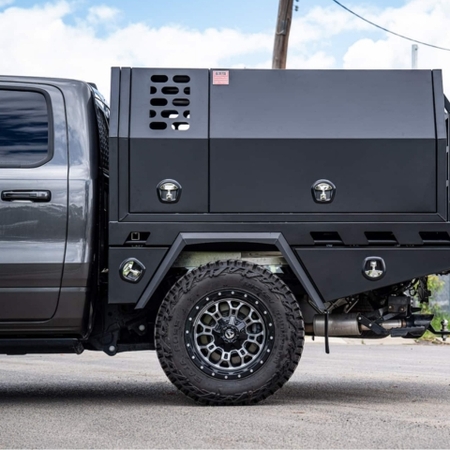
If you have ever tried to take your dog on a work run or camping trip in your ute without a proper dog box, you already know how that story ends. Dog hair everywhere, muddy paw prints across the back seat, a dog hanging over the tailgate, or worse — a fine from the police for unsafe animal transport.
I have spoken with farmers, tradies, hunters, and campers right across Australia, and the question I hear most often is: "What's the best dog box for my ute, and how do I know which size to get?"
That is exactly what this guide answers. By the time you finish reading, you will know what to look for in a quality aluminium dog box, how to measure your dog correctly, what the law says about transporting dogs on utes in every Australian state, and which configuration suits your specific setup — whether you run a Toyota Hilux, a Ford Ranger, a Mitsubishi Triton, or anything else with a tray.
No need to open another tab. Every answer is right here.
What Is a Ute Dog Box — and Why Do You Actually Need One?
A ute dog box is an aluminium enclosure mounted on the tray of a ute that provides a safe, secure, weatherproof, and ventilated space for your dog to travel. It is purpose-built for Australian conditions — which means it needs to handle outback heat, coastal humidity, red dust, and the kind of rough corrugated dirt roads that shake everything loose within 10 kilometres.
Here in Australia, dogs are part of working life in a way that most of the world does not fully appreciate. A kelpie or a blue heeler is not just a pet — it is a working partner. Farmers, jackaroos, fencing contractors, and hunters rely on their dogs every single day. And that means their dogs travel — a lot. Often in conditions that would destroy a standard cage in a matter of weeks.
We built our EZToolbox dog box range specifically for this reality. Not for light weekend use. Not for the occasional trip to the vet. For daily, hard-working Australian conditions where your dog needs to be safe, comfortable, and ready to work the moment the tailgate drops.
Beyond practicality, there is also a legal reason to use a dog box. And this is the part that surprises most people.
Is It Legal to Transport a Dog on a Ute in Australia? State-by-State Guide
This is the most searched question in this category — and almost nobody gives a complete, accurate answer. We will.
The short answer is: yes, it is legal to transport a dog on a ute in Australia — but only if the dog is properly restrained. The definition of "properly restrained" varies by state. Here is the breakdown:
New South Wales (NSW)
Under the NSW Prevention of Cruelty to Animals Act 1979 and Road Transport legislation, a dog must be secured when travelling on the back of a utility vehicle. A dog that is not restrained and falls or jumps from the vehicle can result in a fine for the driver. A proper enclosed dog box with a secured door fully satisfies the legal requirement.
Queensland (QLD)
Queensland's Animal Care and Protection Act 2001 requires that animals must not be transported in a way that causes them unnecessary pain or suffering. Transporting a dog loose on a ute tray — where it can fall, be struck by debris, or be exposed to extreme heat — can be considered an offence. An enclosed, ventilated aluminium dog box is the safest and most legally sound transport method in Queensland.
Victoria (VIC)
The Prevention of Cruelty to Animals Act 1986 in Victoria requires that dogs travelling on ute trays must be tethered or enclosed. Victoria Police and the RSPCA have both issued guidance that tethering alone is considered insufficient if the tether allows the dog to reach the edge of the tray. An enclosed dog box is the recommended compliant solution.
Western Australia (WA)
Under the Animal Welfare Act 2002, dogs must be transported in a way that does not expose them to unnecessary suffering. WA also has Road Traffic regulations that address animal restraint in moving vehicles. An enclosed aluminium dog box is the clearest way to satisfy both requirements in WA.
South Australia (SA)
The Animal Welfare Act 1985 in SA applies broadly to transport conditions. The RSPCA SA recommends enclosed transport for dogs on ute trays, particularly in hot weather conditions. SA summers make ventilated enclosures not just legally sensible but genuinely critical for the dog's survival.
Northern Territory (NT)
The Animal Welfare Act 1999 applies. Given NT's extreme heat conditions, an enclosed and ventilated dog box is strongly recommended both for welfare and legal compliance.
Tasmania (TAS)
The Animal Welfare Act 1993 covers transport. An enclosed dog box satisfies all transport welfare requirements in Tasmania.
The bottom line: across every Australian state and territory, an enclosed aluminium dog box with proper ventilation is the safest, most legally compliant, and most practical way to transport a dog on a ute. Tying your dog with a rope or chain does not fully satisfy welfare requirements in most states and creates serious injury risk if the vehicle brakes suddenly or is involved in an accident.
How to Measure Your Dog for a Ute Dog Box: The Correct Method

This is where most buyers make mistakes — and end up with a box that is either too small for their dog to sit comfortably, or so large it wastes half the tray space.
Here at EZToolbox, we recommend a simple three-measurement method before you buy anything.
Step 1 — Length: Have your dog stand naturally with all four legs on the ground. Measure from the tip of the nose to the base of the tail (not the tip of the tail). Add 100–150mm to this measurement. This gives you the minimum internal box length your dog needs to stand, turn, and lie down comfortably.
Step 2 — Height: Have your dog sit in its natural sitting position. Measure from the ground to the top of its head. Add 100mm. This gives you the minimum internal box height so your dog can sit upright without its head touching the roof.
Step 3 — Width: Measure your dog across its widest point — usually the shoulders. If you are transporting two dogs in one box, add both shoulder widths together and add 200mm. This is your minimum internal box width.
Write these three numbers down before you look at any product page. It saves a lot of confusion.
Quick Reference: Common Australian Breeds and Recommended Box Sizes
| Breed | Approx. Size | Recommended Box |
|---|---|---|
| Kelpie | Medium | 900mm x 650mm x 700mm |
| Blue Heeler / ACD | Medium | 900mm x 650mm x 700mm |
| Border Collie | Medium–Large | 1000mm x 700mm x 750mm |
| Labrador | Large | 1100mm x 750mm x 800mm |
| German Shepherd | Large | 1150mm x 800mm x 850mm |
| Jack Russell / Staffy | Small–Medium | 700mm x 550mm x 600mm |
| Two Kelpies together | Medium x 2 | 1200mm x 700mm x 700mm |
These are minimum internal dimensions. When in doubt, go one size up — a dog that has extra room is always more comfortable than one that is cramped.
Key Features to Look For in a Quality Aluminium Dog Box for Utes
Not all dog boxes are created equal. I have seen cheap imported boxes fall apart within a year of farm use. Here is exactly what to look for — and what we build into every EZToolbox dog box.
1. Aluminium Grade and Wall Thickness
The industry standard for quality ute dog boxes is 3mm marine-grade aluminium sheet. This thickness provides the right balance of strength and weight — heavy enough to resist denting and deformation, light enough to keep overall tray payload practical.
Avoid anything under 2.5mm wall thickness — it will buckle under the weight of an active dog, the vibration of corrugated roads, and the UV stress of the Australian sun over a full season.
2. Ventilation Design
Ventilation is not optional in Australia — it is a welfare necessity. A dog sealed inside an aluminium box in 35°C Queensland heat without proper airflow can overheat within minutes. Our EZToolbox dog boxes feature louvred aluminium ventilation panels on multiple sides, positioned to maximise cross-flow air movement while keeping out rain, dust, and road spray.
Look for ventilation on at least two sides of the box. A single vent at the front is not sufficient for Australian conditions.
3. Locking Mechanism
A proper dog box uses a compression lock or T-lock system — not a simple latch. Compression locks create a positive seal around the door frame, compressing the rubber weather seal to keep out water, dust, and wind. They also prevent the door from rattling open on rough roads or being nudged open by a determined dog.
Our EZToolbox range uses stainless steel T-locks with a positive lock-out feature, so the door cannot be opened from inside or vibrated open during travel.
4. Weather Sealing
The door seal is what keeps your dog dry, dust-free, and protected from road debris. We use full-perimeter EPDM rubber seals on every door opening — the same type of rubber seal used in quality toolboxes and marine applications. This seal compresses against the door frame to create a weatherproof barrier that holds up in driving rain, water crossings, and dusty outback conditions.
5. Gas Strut Lid or Door Operation
If your dog box opens from the top — a common design for half-box configurations — a quality gas strut keeps the lid open while you load or unload your dog without needing a second person to hold it. Our gas struts are rated for at least 30,000 open/close cycles and are replaceable if they ever lose pressure after years of heavy use.
6. Floor and Interior Finish
A bare aluminium floor is slippery, uncomfortable, and hard on joints — particularly for older working dogs. Our EZToolbox dog boxes include a checker-plate aluminium floor for grip, with optional rubber matting inserts for comfort on long trips. The smooth internal weld finishing also means no sharp edges anywhere a dog could injure itself.
7. Mounting System
How the dog box attaches to your ute tray matters more than most buyers realise. A dog box that shifts sideways on a rough road is a safety hazard. Our mounting system uses reinforced bolt-through clamp brackets that lock to the tray rail without drilling, protecting your vehicle's resale value while creating a rigid, rattle-free connection.
EZToolbox Dog Box Configurations: Which One Is Right for You?
We offer several configurations to suit different utes, different dogs, and different working needs.
Full Dog Box
A single full-width box occupying the entire ute tray. Best for: one large dog or two medium dogs, maximum comfort for long trips, farmers and hunters who prioritise the dog's space over storage.
Half Dog Box + Half Toolbox
The most popular configuration we sell. One half of the tray is the dog compartment; the other half is a lockable aluminium toolbox for gear, feed, water, and equipment. Best for: tradies, farmers, and any working dog owner who needs both dog space and organised gear storage on the same tray.
Half Dog Box + Half Fridge Box
For campers and four-wheel drivers who spend multiple nights out. The fridge compartment accommodates a standard 40–60L portable fridge alongside the dog compartment. Best for: four-wheel drive adventurers, station hands, and anyone who does extended trips with their dog in remote areas.
Dog Box Canopy
A full canopy system that covers the entire ute tray, with one or more internal dog compartments and additional enclosed storage. Best for: serious working setups that need maximum weather protection, multiple dogs, and full tray coverage.
EZToolbox vs Competitors: An Honest Comparison
I want to give you a straight comparison. There are other good dog box brands in Australia. Here is how we compare on the features that actually matter.
| Feature | EZToolbox | TC Boxes | AP Boxes | TUFF Australia | OzyToolbox |
|---|---|---|---|---|---|
| 3mm aluminium construction | ✅ Yes | ✅ Yes | ✅ Yes | ✅ Yes | ✅ Yes |
| Multi-side ventilation | ✅ Yes | ⚠️ Single side | ✅ Yes | ✅ Yes | ⚠️ Basic |
| Stainless T-lock hardware | ✅ Yes | ⚠️ Standard latch | ✅ Yes | ✅ Yes | ⚠️ Variable |
| Full EPDM weather seal | ✅ Yes | ⚠️ Basic seal | ✅ Yes | ✅ Yes | ⚠️ Basic |
| Gas strut lid standard | ✅ Yes | ❌ No | ✅ Yes | ✅ Yes | ❌ No |
| Half box + toolbox combo | ✅ Yes | ✅ Yes | ❌ Limited | ✅ Yes | ✅ Yes |
| Half box + fridge combo | ✅ Yes | ✅ Yes | ❌ No | ✅ Yes | ❌ No |
| Custom sizing available | ✅ Yes | ✅ Yes | ❌ No | ❌ No | ✅ Yes |
| Fast shipping Australia-wide | ✅ Yes | ⚠️ Variable | ✅ Yes | ✅ Yes | ⚠️ Variable |
| In-house warranty support | ✅ Yes | ⚠️ Limited | ✅ Yes | ✅ Yes | ⚠️ Small team |
What TC Boxes does well: They have been in the market since 2016 and offer 24 different configurations — genuine product range depth. Their flat plate construction is solid. Where we see the difference is in weather sealing and hardware quality on entry-level models.
What AP Boxes does well: Strong canopy range and good FAQ content on their website. Their compression lock system is well-engineered. Their weakness is limited combo configurations — they focus heavily on the canopy segment rather than standalone tray boxes.
What TUFF Australia does well: Their mix-and-match system is genuinely flexible. If you want a highly customised combination of dog box, fridge box, and storage box in one unit, TUFF's modular approach is strong. Their lead times can be longer than ours on custom configurations.
Where EZToolbox is different: We combine quality construction with fast nationwide shipping, a broad range of standard and custom configurations, and genuine after-sales support from a team that actually knows what a working dog box needs to do in real Australian conditions — not just on a showroom floor.
Dog Box vs Tying Your Dog on the Ute: Why the Box Always Wins
I want to address this directly because a lot of ute owners — particularly in rural areas — have been tying their dogs with a rope or chain for years and consider it perfectly fine.
Here is what the evidence shows:
Tying creates a strangulation risk. If a dog jumps or falls from a tray while tethered, it can hang from the tether and suffocate before the driver realises. This is not rare — it is a documented cause of working dog deaths in Australia every year.
Tying offers no protection from debris. Rocks, gravel, insects, and other road debris strike a dog travelling on an open tray at highway speeds. Eye injuries and lacerations are common in untethered and tethered dogs alike.
Heat exposure is uncontrolled. An enclosed, ventilated dog box creates a microclimate that is significantly cooler than an exposed tray surface in direct sun. In Australian summers, tray surface temperatures can exceed 60°C — far beyond safe limits for any dog breed.
Legal risk is real. As we covered in the state-by-state section above, tying a dog on a ute tray does not satisfy welfare transport requirements in most Australian states. A dog box does.
The investment in a quality aluminium dog box is not just about comfort — it is about keeping your working partner alive and in good condition for as long as possible.
How to Install an EZToolbox Dog Box on Your Ute Tray
Installation is straightforward and does not require drilling your tray. Here is the basic process:
Step 1 — Measure your tray. Confirm internal tray width and depth before the box arrives. Our standard boxes are designed to fit the most common Australian ute tray dimensions, but measuring first avoids surprises.
Step 2 — Position the box. Place the dog box on the tray and confirm it sits flat and level. Most ute trays have a slight camber — our mounting brackets accommodate up to 3 degrees of tray angle without shimming.
Step 3 — Attach the mounting brackets. Our bracket system clamps over the tray rail and tightens with stainless bolts. No drilling required. Tighten firmly until there is zero lateral movement.
Step 4 — Connect any accessories. If your configuration includes a fridge box with a power connection or a water bowl drain, route these connections at this stage before the box is fully loaded.
Step 5 — Test the door and locks. Open and close the door several times, engage the T-locks, and confirm the weather seal is compressing evenly around the entire perimeter. A properly installed box should have zero rattles and a firm, positive lock engagement.
Most EZToolbox dog boxes can be fully installed in under an hour with basic hand tools.
Frequently Asked Questions
What is the best dog box for a kelpie? A kelpie typically measures 850–950mm nose to tail base and sits at around 550–600mm at the head. We recommend an internal box dimension of at least 900mm x 650mm x 700mm for a single kelpie. Our standard medium dog box covers this comfortably with room to turn and lie down.
Can two dogs fit in one dog box? Yes — in a full-size box or a box specifically configured for two compartments. For two medium working dogs like kelpies or heelers, you need at minimum a 1200mm internal width. We offer dual-compartment dog boxes with a central divider panel for working setups that transport multiple dogs separately.
How much does a ute dog box cost in Australia? Quality aluminium ute dog boxes in Australia range from approximately $600–$800 for a basic half box to $1,200–$2,000+ for a full custom combo configuration. Cheap imported boxes under $400 are typically under 2mm aluminium with inferior sealing and hardware — we do not recommend them for working or daily transport use.
What utes do EZToolbox dog boxes fit? Our standard range is designed to fit the most common ute tray sizes in Australia, including the Toyota Hilux, Ford Ranger, Mitsubishi Triton, Isuzu D-MAX, Mazda BT-50, Nissan Navara, and GWM Ute. We also offer custom sizing for non-standard tray dimensions — contact our team with your tray measurements.
Are EZToolbox dog boxes weatherproof? Yes. Our full-perimeter EPDM rubber weather seal and louvred ventilation design keeps the interior dry in driving rain while maintaining airflow. We test our seal systems against direct water spray — your dog stays dry even in heavy rain at highway speeds.
How do I clean a dog box? Remove the rubber floor mat, hose out the interior with water, and wipe down with a mild detergent. The smooth internal aluminium finish and checker-plate floor are designed for quick, easy cleaning. We recommend a rinse-out after every trip in muddy or dusty conditions to keep the drain holes clear.
Do dog boxes affect ute payload? A standard aluminium dog box weighs between 25kg and 60kg depending on size and configuration. This should be factored into your ute's payload calculation alongside the dog's weight and any other tray-mounted equipment. Most utes have 700–1000kg tray payload — a dog box and one or two dogs represents a small fraction of this.
Why EZToolbox Is Our Recommendation for the Best Dog Boxes for Utes in Australia
We have tried to make this guide as honest and complete as possible — covering not just our own products but the full landscape of what a quality ute dog box should look like, what the law requires, how to size correctly, and what the real differences between brands are.
Here is where we land.
We build EZToolbox dog boxes for Australian conditions — not for a European or American market that never has to deal with 40°C outback heat, river crossings, and 200km of corrugated station track in a single day. Every feature we include — the 3mm aluminium, the EPDM weather seal, the stainless T-locks, the multi-side ventilation, the gas strut lids, the no-drill mounting brackets — is there because we know what Australian working conditions actually demand.
We ship fast, nationwide. We offer genuine after-sales support. And we offer the full range of configurations — full box, half dog box with toolbox, half dog box with fridge box, and custom sizes — so you can spec exactly the right setup for your ute, your dog, and your working life.
Ready to find the right dog box for your ute? Browse our full range at eztoolbox.com.au/aluminium-toolboxes/dog-boxes or contact our team with your tray dimensions and we will recommend the right configuration for your setup.