Top Utes Trays builder in Australia with high quality material

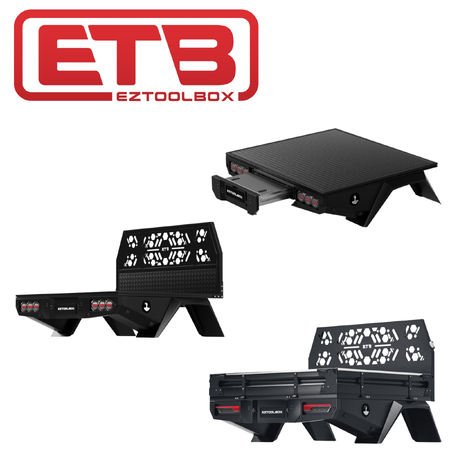
I have spent years working alongside tradies, farmers, and overlanders across Australia. And one thing I can tell you with complete confidence: the single most impactful upgrade you can make to your ute isn't a lift kit, a fridge, or a rooftop tent. It's the tray.
Your ute tray is the backbone of your entire mobile operation. Get it wrong, and you're fighting a losing battle every single day — warped floor panels, rusting corners, rattling toolboxes, and a payload rating that's been quietly chewed up before you've even loaded a single piece of gear. Get it right, and your ute becomes something else entirely: a precision, purpose-built work platform that performs whether you're on a Brisbane construction site or corrugated dirt tracks deep in the outback.
We put this guide together so you don't need to go back to Google. Everything you need to know about finding the top utes trays builder in Australia — the materials, the fabrication standards, the questions to ask, and the red flags to avoid — is right here.
What Is a Ute Tray and Why Does It Matter More Than You Think?
A ute tray is a flat load-carrying platform that replaces the factory tub on a cab-chassis ute. Unlike a factory tub, a custom-built tray is engineered to suit your specific work requirements — whether that's hauling machinery, setting up a mobile tradie workspace, or building an overland touring rig.
The majority of new utes are sold as dual-cab variants with a factory tub fitted. But if you want a proper, functional load platform with accessory integration — toolboxes, canopies, water tanks, drawers, ladder racks — a quality custom tray is the only real foundation that makes that possible.
Here in Australia, we're fortunate to have some of the world's most skilled ute tray builders. But the market has also become flooded with cheap imports and low-grade fabricators who cut corners in ways that aren't visible on the showroom floor. That's exactly why knowing what to look for matters.
Aluminium vs. Steel Ute Trays: The Real-World Comparison
This is the number-one question I get from people shopping for a tray build. The honest answer is: it depends entirely on how you use your ute. But let me give you the data so you can make the call yourself.
Weight and GVM: The Numbers That Actually Run Your Business
One of the most misunderstood aspects of ute tray selection is how tray weight directly eats into your legal payload. Your vehicle's Gross Vehicle Mass (GVM) is a fixed ceiling. Every kilogram your tray weighs is a kilogram less you can carry in tools, materials, passengers, or gear.
Here's how the maths plays out in practice:
| Scenario | Steel Tray | Aluminium Tray |
|---|---|---|
| Typical tray weight | 300kg – 400kg | 100kg – 180kg |
| Potential payload saving | Baseline | Up to 140kg+ extra payload |
| Impact on fuel economy | Higher (increased kerb weight) | Lower (reduced kerb weight) |
| Corrosion resistance | Requires galvanising or powder coat | Naturally corrosion-resistant |
| Ideal use case | Heavy construction, mining, high-impact loads | Tradies, touring, coastal environments, fleet |
| Approximate cost | Lower upfront | 30% higher than steel |
I've seen it happen too many times: a tradie invests in a steel tray because it was $800 cheaper upfront, then runs under their GVM limit all year and cops a defect notice at a weigh station. The payload loss alone costs more than the price difference.
That said, steel genuinely wins for extreme industrial work — if your cargo involves heavy machinery, mining equipment, or high-impact point loads, a steel tray's superior yield strength is hard to argue against.
Corrosion Resistance: What Australian Conditions Actually Do to Metal
We are not a forgiving country to metal. Coastal salt air in Queensland, high humidity in the Top End, red dust in the Pilbara, acidic mine site runoff in Western Australia — each of these environments attacks untreated steel aggressively.
Aluminium forms a natural self-healing oxide layer that resists rust without any additional treatment. Steel, by contrast, requires hot-dip galvanising or a high-quality powder coat finish to survive coastal or humid environments long-term, and if that surface is ever scratched or chipped, the clock starts ticking.
For most tradies and tourers I know, aluminium is the practical choice for Australian conditions — lighter, naturally rust-resistant, and increasingly matched to steel on structural strength when properly engineered with internal bracing.
The 7 Engineering Standards That Separate Premium Tray Builders from the Rest
When we walk a customer through a tray build at ezToolBox, we don't talk about aesthetics first. We talk about the engineering beneath the surface — the stuff you can't see but that determines whether your tray lasts five years or fifteen.
Here are the seven quality markers I look for when evaluating any custom ute tray builder in Australia:
1. Plate Thickness: Minimum 2.5mm for Structural Performance
This is where budget fabricators quietly cut costs. A 1.5mm or 2.0mm aluminium tray looks identical on the showroom floor to a 2.5mm build. But under heavy load, repeated off-road vibration, or a point impact from a dropped tool, the difference shows up fast.
2.5mm high-grade aluminium flat plate is the benchmark we build to. It provides the structural rigidity to resist oil-canning (that oil-drum flex sound and motion under load), maintains clean weld lines, and survives the torsional stress of real off-road terrain.
2. Welding Method: TIG Welding vs. MIG Spot Welding
A tray can look beautifully welded on the outside and be fundamentally compromised structurally. Spot welds and intermittent tack welds create stress concentration points — the exact locations where cracks initiate on corrugated tracks.
Premium builders use 100% continuous TIG-welded seams throughout. TIG welding delivers full structural fusion across every joint with zero pinholes, zero weak points, and no need for seam filler or silicone to cover gaps. I inspect welds on every tray I evaluate — it's non-negotiable.
3. Internal Chassis Mounting and Frame Engineering
A tray shell is only as strong as its internal skeleton. The best builders engineer a complete internal structural framework — aluminium tube trusses, cross-members, and Unistrut channels that distribute load forces down through the vertical pillars rather than concentrating stress at corner joints.
This internal framework matters for two reasons: structural load rating, and modular customisation. Unistrut channels allow you to bolt in 12V electrical systems, tool drawer slides, fridge mounts, and dog box anchors without drilling through the outer skin, preserving your weather seal permanently.
4. Floor Engineering: Reinforced False Floor vs. Open Shell
Budget trays often ship with no structural floor — just an open shell bottom. This is a false economy. Under heavy internal loads, the floor sags, slide systems lose their tracking, and the entire internal organisation of your fitout degrades rapidly.
Quality builders integrate a reinforced false floor system as a standard inclusion. This anchors internal slide assemblies, distributes point loads from toolboxes and drawers, and eliminates floor flex under heavy operational use.
5. Tie-Down Points and Load Rating
Every serious tray needs independently rated tie-down anchor points — not just welded loops, but engineered attachment points tested to a minimum load specification. Ask your builder for the rated pull-out force on their tie-down system. If they can't give you a number, walk away.
Look also for an integrated tie rail system recessed under the tray deck. This keeps your load restraint points accessible without creating trip hazards or interfering with undertray storage.
6. Undertray Storage Integration
The space beneath your tray floor is some of the most valuable real estate on your ute. Premium builders design their trays from the start with undertray storage compatibility — whether that's integrated toolboxes, trundle drawers, water tanks, or accessory channels.
The best undertray drawer systems I've seen feature 3-point key locking, sealed rollers for long-term durability, extruded aluminium faces for weatherproofing, and extension ratings of 100kg or more without sagging.
7. GVM Compliance and Engineering Certification
This is the most frequently overlooked standard — and the one that can cost you the most money. In Australia, a modified vehicle that exceeds its GVM is a roadworthy failure waiting to happen. Any premium tray builder should provide you with the tare weight of your configured tray in writing, including all fitted accessories, so you can verify your remaining payload against your vehicle's specification.
Some builders go further and offer independently engineered chassis mount systems — the tray-to-vehicle connection points that are certified to a specific load rating. This matters enormously for fleet operators and commercial vehicle compliance.
What the Top Ute Tray Builders in Australia Actually Offer
Having evaluated many builders across different states, here's what I've observed separates the genuine top-tier fabricators from the pack:
| Quality Indicator | Budget Builders | Top-Tier Builders |
|---|---|---|
| Material thickness | 1.5mm – 2.0mm sheet or thin checker plate | 2.5mm+ marine-grade aluminium flat plate |
| Welding standard | Intermittent tack welds, seam filler used | 100% continuous TIG-welded seams |
| Internal reinforcement | None or basic riveted gussets | Full tube truss + Unistrut frame system |
| Floor structure | Open shell, no floor included | Reinforced false floor as standard |
| Tie-down system | Basic welded loops, unrated | Engineered tie rail, rated anchor points |
| Undertray storage | After-thought bolt-on options | Integrated from original design |
| GVM documentation | Verbal estimate only | Written tare weight + certification |
| Warranty | 12 months or none | 2-year structural minimum; some offer lifetime |
| National availability | Local only | Pick-up or freight across Australia |
At ezToolBox, we hit every one of these markers — and we back our builds with a full 2-year structural warranty across our national pick-up network in Victoria (Laverton North), Queensland (Coopers Plains), and New South Wales (Penrith).
Vehicle Compatibility: Which Utes Suit a Custom Tray Conversion?
The most popular utes for custom tray builds in Australia right now are the Toyota HiLux, Ford Ranger, Isuzu D-MAX, Mitsubishi Triton, and Mazda BT-50. All of these are available in cab-chassis configuration, which makes the tray conversion straightforward.
Premium builders design their tray geometry specifically for your vehicle's chassis rail width, rear overhang dimensions, and tow point access requirements. A well-matched tray should align cleanly with your cab headboard, maintain factory aerodynamic lines, and clear all standard vehicle lighting without modification.
If I'm evaluating a tray fitment for a specific vehicle, I always check:
- Tray length vs. tray bed floor length — confirm rear light panel clearance
- Tray width vs. cab profile — the taper must match for aerodynamic and aesthetic alignment
- Chassis clamp compatibility — high-tensile clamps should be specified, not generic hardware
- Towbar clearance — ensure the tray rear edge and wiring harness integration is clean
The Custom Tray Fitout: Building Your Mobile Workspace
A tray is just the foundation. What makes a ute tray truly functional for trade or touring work is the fitout built on top of it. Here's how I think about building out a complete ute tray setup:
Toolboxes and Side Access Storage
Side-mount toolboxes on a quality tray should be TIG-welded aluminium, fitted with compression-seal lids, and secured with either 3-point locking systems or padlock loops on heavy-duty compression handles. Cheap stamped steel toolboxes with piano-hinge lids are a false economy — the hinges fail within two years of daily use in dusty conditions.
Canopy Integration
Many tradies and tourers add a full-height canopy to their tray. If you're considering this, confirm your tray builder's canopy mounting compatibility upfront. The best tray-and-canopy combinations are designed as integrated systems with matching headboard geometry, shared drainage channels, and compatible anchor points for internal Unistrut-based fitouts.
Water Tank and Undertray Systems
For remote touring or farm work, an undertray water tank is one of the most practical additions available. Quality tray builders integrate tank mounting brackets and draw-down plumbing access points into the original tray design. After-thought tank mounting on a tray not designed for it is always a compromised solution.
12V Electrical Systems
If you're running dual-battery systems, compressor fridges, lighting rigs, or charging stations, your tray needs a designed electrical integration plan — not a series of holes drilled through the tray skin after the fact. The Unistrut internal frame system allows electrical boards and cable management to be bolted in cleanly without compromising weather sealing.
6 Questions to Ask Any Ute Tray Builder Before You Commit
We always tell customers: a premium builder welcomes hard questions. A budget builder deflects them. Before signing anything with a ute tray fabricator, get clear answers to these six:
- What is the tare weight of this tray with my planned accessories — in writing?
- What plate thickness do you build to, and can I see your material certification?
- Is your welding continuous TIG throughout, or are there tack-welded sections?
- What is the load rating on your tie-down anchor points?
- What does your warranty cover, and how long is the structural guarantee?
- Are your chassis mounts independently engineered and certified for my vehicle?
If a builder hesitates on any of these, treat it as a red flag. The top ute tray builders in Australia are proud of their specs — they'll answer every one of these without blinking.
Why the Right Tray Builder Pays for Itself
I'll be blunt about the economics: a quality custom tray from a top Australian fabricator will cost more upfront than a budget build. But the total cost of ownership tells a completely different story.
A premium 2.5mm TIG-welded aluminium tray with proper internal reinforcement, engineered tie-downs, and a 2-year structural warranty will run reliably for 10 to 15 years with normal maintenance. A budget 1.5mm tack-welded build typically shows structural fatigue within three to five years of hard commercial use — and the repair costs, downtime, and gear damage that accumulates in that time easily exceeds the price difference on the original purchase.
For fleet operators, the case is even clearer. Consistency of specification, warranty coverage across vehicles, and compliance documentation for GVM management all have real dollar values that a cheap fabricator simply cannot provide.
Frequently Asked Questions About Ute Tray Builders in Australia
Q1: What is the best material for a ute tray in Australia — aluminium or steel?
For most Australian tradies, tourers, and fleet operators, aluminium is the better choice in 2025. A quality aluminium tray weighs between 100kg and 180kg, compared to 300kg or more for an equivalent steel tray. That weight saving translates directly into more legal payload — tools, materials, water, or gear. Aluminium also resists corrosion naturally without galvanising or powder coat maintenance, which matters enormously in coastal Queensland, humid tropical regions, or dusty outback environments. Steel remains the preferred choice for extreme industrial work such as mining, heavy construction, or high-impact point loads where yield strength is the top priority.
Q2: How much does a custom ute tray cost in Australia?
Custom ute tray pricing in Australia varies based on material, size, and accessory fitout. As a general guide for 2025:
| Tray Type | Approximate Starting Price (inc. GST) |
|---|---|
| Entry-level aluminium flat tray (basic) | $2,900 – $3,500 |
| Mid-range aluminium tray with dropsides and headboard | $4,500 – $6,500 |
| Premium custom aluminium tray (full fitout) | $7,000 – $12,000+ |
| Professional installation (fitting only) | $450 – $1,500 |
Prices vary by state, builder, vehicle model, and the level of customisation. Always get the tare weight included in your quote, not just the price — a tray that saves you $1,000 upfront but costs you 150kg of payload often ends up more expensive in the long run.
Q3: How long does it take to get a custom ute tray built and fitted in Australia?
Lead times depend on the builder, the level of customisation, and demand. For a standard pre-designed tray that fits a common vehicle like a Toyota HiLux, Ford Ranger, or Isuzu D-MAX, many builders carry stock or can build and fit within 1 to 5 business days. For a fully custom build with integrated toolboxes, undertray storage, canopy mounts, and electrical integration, allow 2 to 6 weeks depending on the fabricator's current workload. At ezToolBox, we keep popular configurations in stock at our pick-up locations in Victoria, Queensland, and New South Wales for faster turnaround.
Q4: Do I need my ute at the workshop to get a tray built?
In most cases, no — not for the fabrication stage. Premium builders like us keep detailed dimensional data on file for all major Australian ute models: Toyota HiLux, Ford Ranger, Isuzu D-MAX, Mitsubishi Triton, Mazda BT-50, GWM Cannon, and more. The tray is built to your vehicle's exact chassis specifications without needing the ute present. You only need to bring your vehicle in for the fitting appointment, which typically takes one day. If you're ordering a highly custom build with unusual chassis modifications or non-standard accessories, a physical inspection may be recommended.
Q5: Will a custom ute tray affect my vehicle's GVM or roadworthiness?
Yes — and this is one of the most important things to understand before ordering. Every kilogram your tray weighs reduces your legal payload by the same amount. Adding a 300kg steel tray to a ute with a 1,000kg payload rating leaves you with only 700kg for everything else — tools, passengers, and gear included.
In some Australian states, chassis-mounted tray modifications may also require engineer's certification for roadworthiness compliance. Always ask your builder to provide the tare weight of your configured tray in writing, and subtract that from your vehicle's GVM to confirm your usable payload. A reputable builder will walk you through this calculation — it's a sign of quality when they bring it up before you do.
Q6: Can I add a canopy, toolboxes, or drawer systems to a ute tray later?
Absolutely — and the best tray builds are specifically designed with future accessory integration in mind. A premium tray with an internal Unistrut frame system allows you to bolt in canopies, tool drawer slides, 12V electrical boards, fridge mounts, and dog box anchors at any point after the original installation, without drilling through the outer skin and compromising your weather seal.
If you think you might want a canopy down the track, tell your builder upfront. A tray designed for canopy integration will have the correct anchor points, drainage geometry, and headboard alignment pre-built in. Retrofitting canopy compatibility to a tray not originally designed for it is always a more expensive and less clean solution.
Q7: What ute models are compatible with custom tray builds in Australia?
Virtually any cab-chassis ute sold in Australia can be fitted with a custom tray. The most common models we see in 2025 include:
- Toyota HiLux (single, extra, and dual cab)
- Ford Ranger (including Raptor cab-chassis)
- Isuzu D-MAX
- Mitsubishi Triton
- Mazda BT-50
- GWM Cannon
- LDV T60
- Nissan Navara
- Mercedes-Benz X-Class
- Toyota LandCruiser 70 Series (single and dual cab)
If your vehicle isn't on this list, contact your builder directly — most premium fabricators can accommodate non-standard models with a physical chassis measurement. At ezToolBox, we have fitment data on file for the vast majority of current Australian ute platforms.
Q8: Is a ute tray better than a factory tub?
For serious trade, farming, or touring use — yes, almost always. A factory tub is designed to be a one-size-fits-all solution for the general consumer market. A custom tray is engineered specifically for how you use your vehicle. The key advantages of a custom tray over a factory tub include:
- Greater payload capacity (tray conversions are typically lighter than factory tubs)
- Full accessory integration — toolboxes, canopies, drawers, water tanks, racks
- Better load restraint with rated tie-down anchor points
- Flat, open deck flexibility for long or bulky loads
- Modular customisation that evolves with your work requirements
The trade-off is cost and lead time, but for anyone using their ute commercially or seriously off-road, the investment in a custom tray pays for itself through improved efficiency, reduced gear damage, and longer-term durability.
Q9: What warranty should I expect from a quality ute tray builder in Australia?
A premium Australian ute tray builder should offer a minimum 2-year structural warranty on workmanship and materials. Some leading fabricators offer extended warranties — including Boss Aluminium's lifetime warranty on workmanship and Conweld's 10-year structural guarantee. At ezToolBox, we back every tray build with a full 2-year structural warranty. Be cautious of builders offering less than 12 months or who limit their warranty to "manufacturing defects" only with no definition of what that covers. A warranty is only as good as the builder's willingness to honour it — check reviews and ask for references from past customers before committing.
Q10: Can a ute tray be freighted to me if there's no local builder?
Yes. Most premium Australian ute tray builders offer freight delivery nationwide. While fitting the tray correctly requires some mechanical know-how (chassis clamp torque specs, wiring integration, and alignment), many experienced ute owners complete the installation themselves. If you prefer professional fitting, most builders can recommend a local installer or auto electrician in your area. At ezToolBox, we have pick-up locations in Laverton North (VIC), Coopers Plains (QLD), and Penrith (NSW), and can arrange freight for customers across Australia.
Final Verdict: What to Look for in the Top Ute Tray Builders in Australia
We've covered a lot of ground in this guide. Here's the summary framework I use every time I evaluate a tray builder:
- Material: Minimum 2.5mm marine-grade aluminium flat plate — non-negotiable for premium builds
- Welding: 100% continuous TIG-welded seams, no tack welds, no filler
- Structure: Full internal tube truss with Unistrut frame integration
- Floor: Reinforced false floor as a standard inclusion
- Tie-downs: Engineered, rated anchor points — get the load spec in writing
- Compatibility: Purpose-designed fitment for your specific ute model
- Compliance: Written tare weight, GVM documentation, certified chassis mounts
- Warranty: Minimum 2-year structural coverage, national support availability
At ezToolBox, every tray we build meets or exceeds each of these standards. We've engineered our range specifically for Australian conditions, Australian ute platforms, and Australian working environments — from the construction sites of Sydney and Melbourne to the remote stations of the outback.
If you're ready to stop compromising and build a ute tray that actually works the way you do, we're ready to help you spec it out. Reach out to our team at eztoolbox.com.au and let's build something that lasts.