
Ultimate Heavy Duty Aluminum Tub Canopy Guide | EZ Toolbox

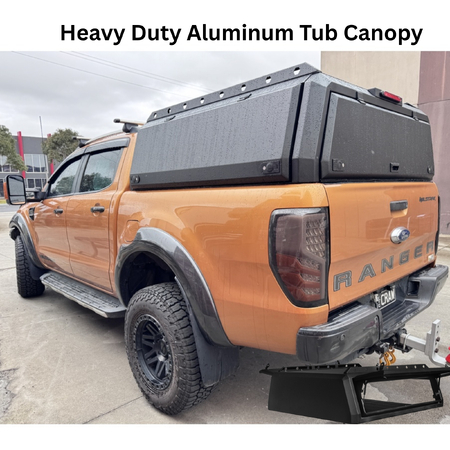
For many Australian ute owners, the factory tub is a blank canvas—a space with immense potential that is often underutilized. Whether you are a professional tradie protecting thousands of dollars in specialized tools or an off-road enthusiast preparing for a solo trek across the Simpson Desert, the heavy duty aluminum tub canopy is the single most important modification you will make.
In the modern market, consumers are flooded with options. While fiberglass canopies offer a sleek, color-matched look and ABS plastic provides a budget-friendly entry point, they often fail under the extreme stresses of corrugated roads, high-speed highway buffeting, and heavy roof loads.
Ultimate Heavy Duty Aluminum Tub Canopy Guide | EZ Toolbox
In this definitive guide, we explore the engineering behind aluminum builds, solve the most common "canopy headaches," and provide a roadmap to selecting a setup that lasts a lifetime.
1. Material Science: Why 5052-Grade Aluminum is the Gold Standard
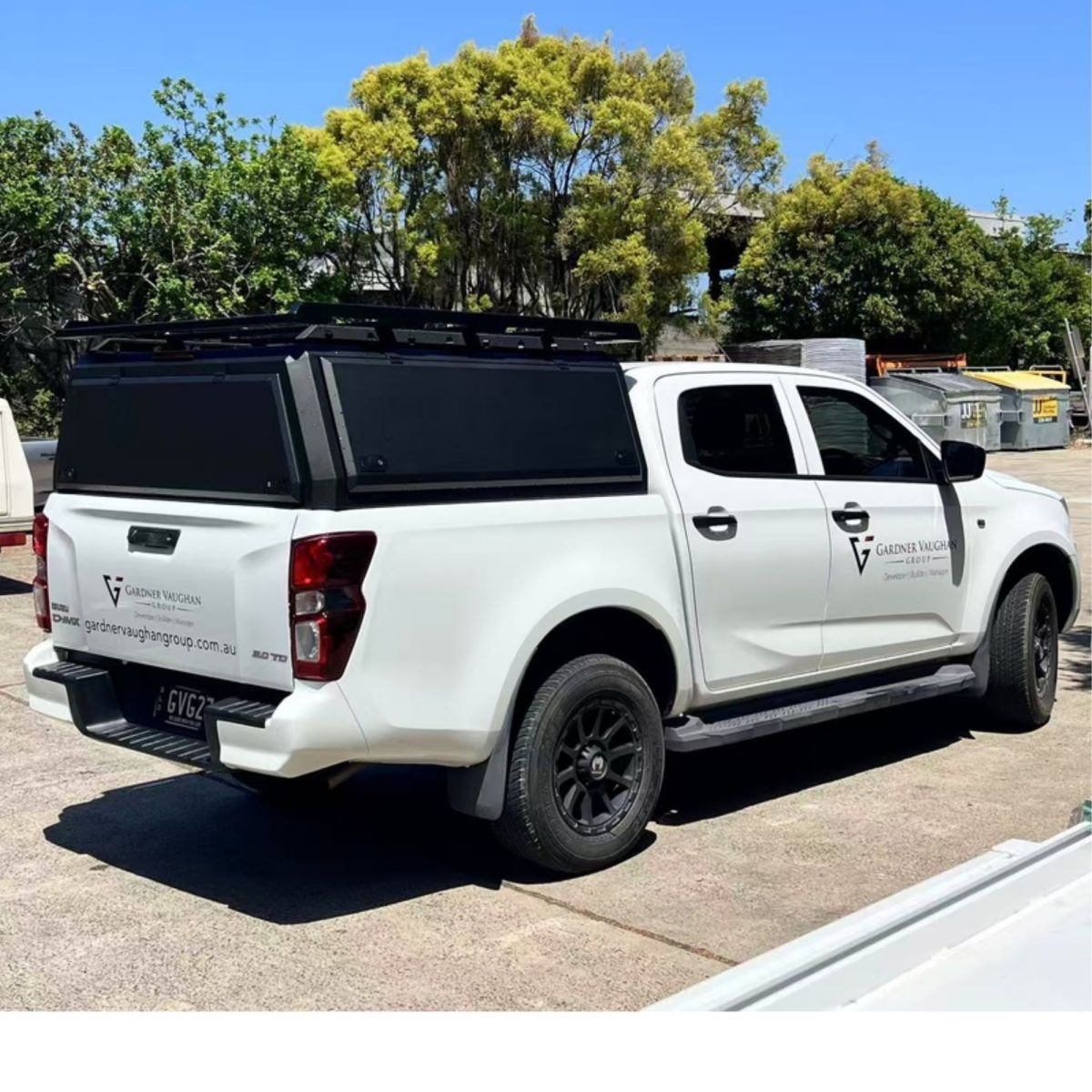
When manufacturers use the term "heavy duty," it shouldn't just be marketing fluff. It should refer to the grade of the alloy and the thickness of the plate used in construction.
The Chemistry of 5052 Marine-Grade Aluminum
A high-end canopy should be constructed from 5052-H32 aluminum. This specific alloy is enriched with magnesium, providing:
- Superior Corrosion Resistance: Essential for coastal driving and salt-spray environments where steel would rust and fiberglass would eventually chalk and degrade.
- High Fatigue Strength: Unlike 6061 aluminum (which is harder but more brittle), 5052 can withstand the constant "flexing" of a vehicle chassis without developing stress cracks.
- Formability: It allows for precision CNC folding, which reduces the total length of welds required, thereby increasing the overall structural integrity of the shell.
Plate Thickness vs. Structural Weight
Most "standard" retail canopies use 1.5mm to 2.0mm aluminum. While lightweight, this thin skin can "oil-can" (the popping sound made when wind pressure hits the flat panels at 110km/h). A true heavy duty canopy utilizes 2.5mm to 3.0mm reinforced plate. This thickness ensures a solid foundation for mounting external accessories like shovels, high-lift jacks, or spare tires directly to the exterior.
2. Structural Integrity: Understanding Load Ratings
If you're looking for an answer to "Can I put a rooftop tent on my canopy?" the answer lies in the distinction between static and dynamic loads.
Dynamic Load Rating (The "Driving" Weight)
The dynamic load is the weight your canopy can carry while the vehicle is in motion. For a heavy-duty aluminum build, you should look for a rating of at least 150kg to 200kg. This accounts for:
- The weight of the roof racks or flat platform.
- The Rooftop Tent (RTT) itself.
- Stored recovery gear or water tanks.
- The exponential G-forces applied when hitting a pothole or a washout at 80km/h.
Static Load Rating (The "Camping" Weight)
The static load is what the canopy holds when the vehicle is stationary. A high-quality aluminum canopy can support 350kg to 500kg. This is what allows two adults and a child to sleep in an RTT safely without the canopy pillars buckling or the tub of the ute spreading.
3. The Engineering of Dust & Weather Proofing
If you’ve ever driven a dirt track in the Outback, you know that "Bull Dust" is fine enough to penetrate even the smallest gaps. A cheap canopy will leave your fridge, clothes, and sleeping bags covered in a layer of red silt.
Automotive Grade EPDM Seals
Standard foam tape will degrade in the harsh Australian UV within 12 months. High-end builds use EPDM (Ethylene Propylene Diene Monomer) rubber seals. These seals are "pinch-welded" onto the door frames, creating a bulb-style compression that remains elastic even after years of exposure to heat and cold.
Positive Pressure Vents: The Science of Clean Gear
A Positive Pressure Vent is a small, forward-facing scoop. As you drive, it forces filtered air into the canopy, creating a "high-pressure" zone inside. Because air naturally moves from high to low pressure, the air inside the canopy "pushes out" against the gaps in your tailgate, effectively creating an invisible wall that prevents dust from being sucked in.
4. Security: Turning Your Tub into a Mobile Vault
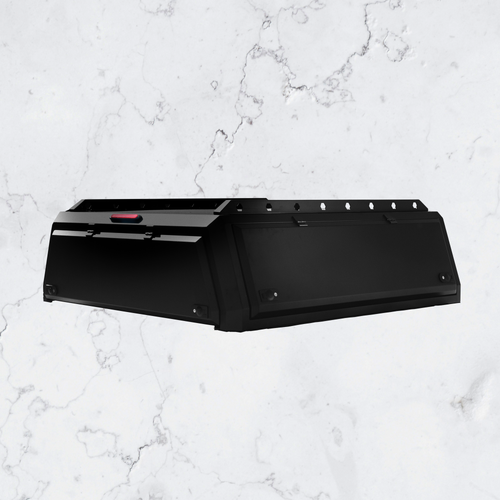
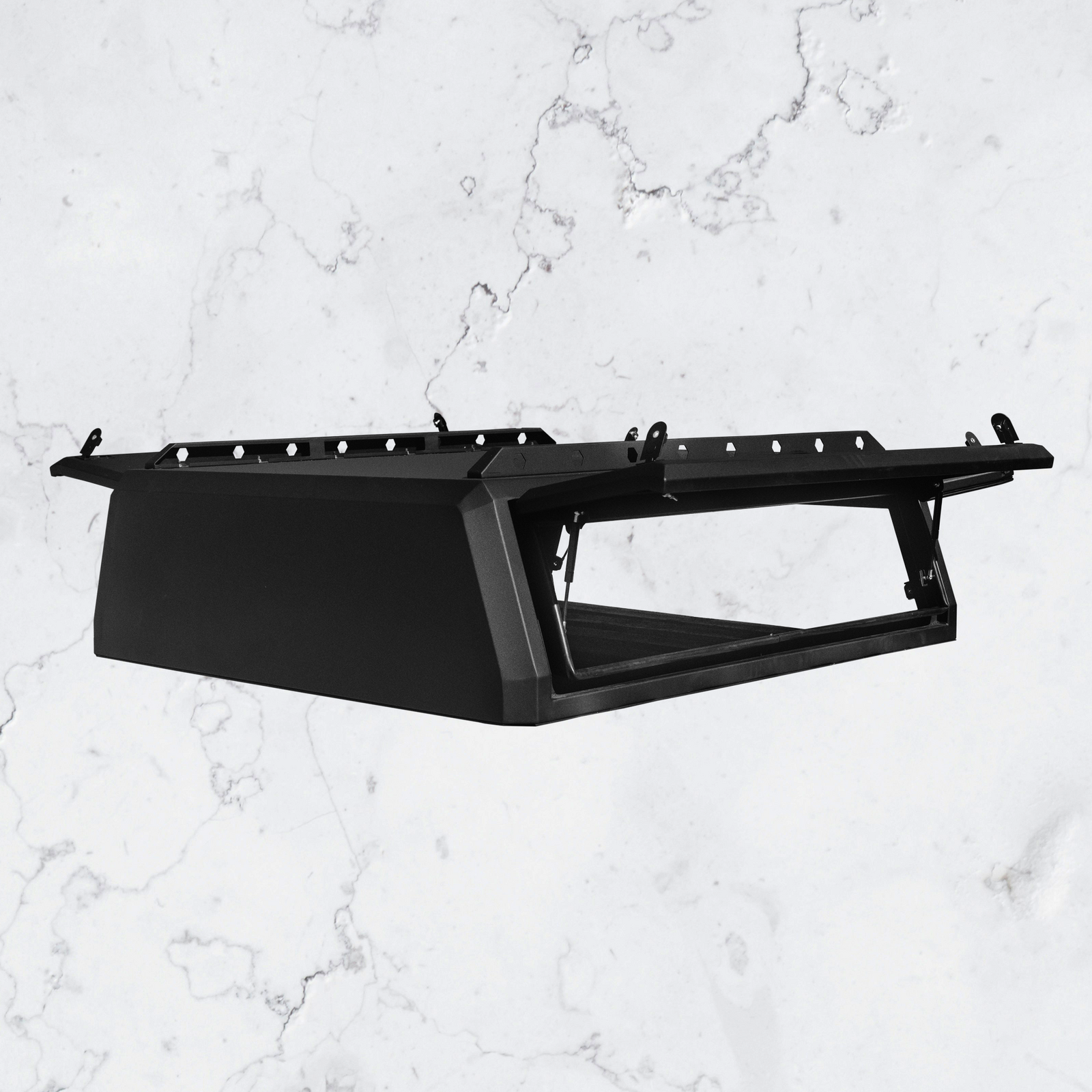
For the professional tradie, a canopy is essentially a mobile insurance policy for their livelihood.
Whale Tail Compression Locks
Standard T-handles are vulnerable to simple prying tools. Whale Tail locks feature a internal compression mechanism that pulls the door tight against the EPDM seal as you turn the handle. They are typically made of cast alloy and feature a padlock-able loop for secondary security on high-value job sites.
Central Locking Integration
Modern aluminum canopies offer "plug-and-play" wiring looms that connect the canopy locks to your ute’s factory key fob. This removes the human error of forgetting to lock the canopy doors when you leave the vehicle, ensuring your tools are always as safe as the vehicle itself.
5. Maximizing Utility: Interior Customization & Layout
The true power of a heavy-duty aluminum tub canopy is its modularity. Because aluminum is easy to drill and tap, the internal layout can be customized to suit your specific workflow or camping style.
T-Slot Extrusions and Internal Shelving
Look for canopies that incorporate T-slot extrusions in the internal frame. This allows you to bolt on accessories without drilling through the external shell.
- Fridge Slides: A must-have for the tourer to access cold goods without climbing into the tub.
- Drawer Systems: Perfect for separating hand tools from camping equipment.
- Inverter & Battery Mounting: Aluminum allows for easy heat dissipation when mounting DC-DC chargers and 2000W inverters for on-site power.
Half-Canopy & Dog Box Configurations
For those who travel with pets or need to carry fuel cans and greasy equipment, the dog box/canopy hybrid is a popular choice. It provides a ventilated section for animals while keeping the rest of your gear enclosed and secure in the main compartment.
6. Vehicle Specifics: Fitment and GVM Considerations
The weight of your canopy contributes to your vehicle’s GVM (Gross Vehicle Mass). Every kilogram spent on the canopy is a kilogram less of payload you can carry.
The Weight Advantage
- Steel Canopy: 150kg+ (Heavy, leads to sagging suspension).
- Fiberglass Canopy: 80kg - 130kg (Moderate weight, but brittle).
- Aluminum Canopy: 60kg - 110kg (The "Goldilocks" zone of strength vs. weight).
Popular Fitments
- Toyota Hilux: Requires specific reinforced mounting brackets for the "J-Deck" or "A-Deck" tubs.
- Ford Ranger (Next-Gen): Needs to account for the tub-top load-bearing limits.
- Isuzu D-MAX: Often paired with a clamp-on system to preserve the factory paintwork.
7. Step-by-Step Maintenance for Long-Term Durability
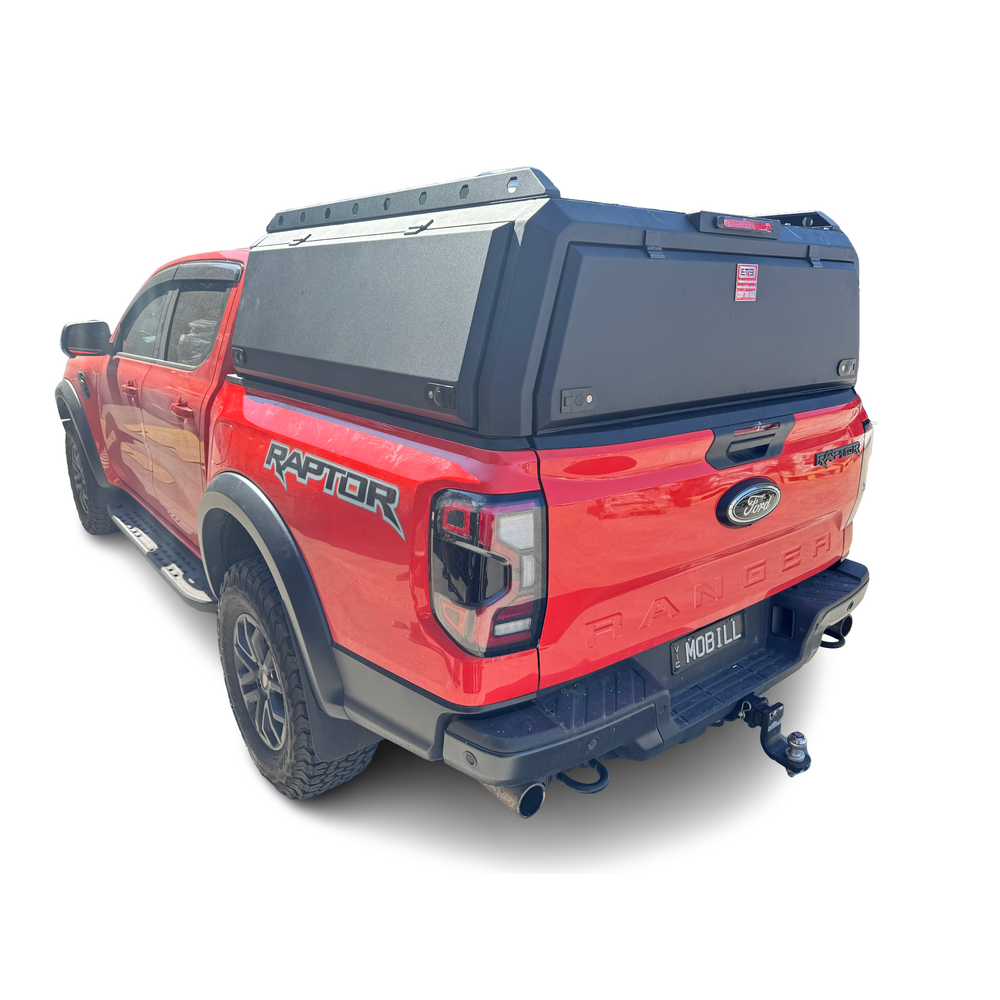
To maintain the "Helpful Content" status of this guide, we include actionable steps for owners to ensure their investment lasts 10+ years.
Monthly Maintenance Checklist
- Seal Cleaning: Wipe down EPDM seals with a damp cloth to remove grit that can act like sandpaper against the paint.
- Hinge Lube: Use a dry-film lubricant (like PTFE) on the door hinges. Avoid wet oils which attract dust and create a grinding paste.
- Check Tightness: Vibrations from corrugated roads can loosen bolts. Check your mounting clamps and roof rack fasteners every 1,000km of off-road travel.
Restoring the Finish
If you have a powder-coated aluminum canopy that has become dull, use a non-abrasive wax to restore the UV protection. For raw checker plate canopies, a simple aluminum brightener will remove oxidation and restore the "showroom" shine.
8. The Comparison Matrix: Aluminum vs. The Rest
|
|
|
|
|
|
|
|
|
|
|
|
|
|
|
|
|
|
|
|
|
|
|
|
|
|
|
|
|
|
9. FAQ
Is an aluminum canopy worth the extra money?
Yes. While the initial cost of an aluminum canopy is higher than fiberglass or ABS, its durability, higher load ratings, and long-term resale value make it a more cost-effective investment for those who use their vehicles for work or off-road touring.
Can I fit a rooftop tent to a factory tub?
Technically yes, but it is not recommended without a canopy or a tub-rack. A heavy-duty aluminum canopy provides the necessary structural support to prevent the tub walls from bowing outward under the weight of the tent and occupants.
How do I stop my canopy from leaking?
Most leaks occur at the tailgate or the front of the tub. Using high-quality EPDM seals and ensuring the canopy is correctly aligned and clamped will solve 95% of water ingress issues.
Does an aluminum canopy get hot inside?
Aluminum is a great conductor of heat, meaning it sheds heat quickly once the vehicle is moving. To keep the interior cool when parked, many owners opt for a white powder-coated finish or install internal marine-carpet lining for insulation.
10. Final Verdict: Why the Heavy Duty Aluminum tub Canopy Wins
Investing in a heavy duty aluminum tub canopy is about more than just storage; it’s about peace of mind. Whether you’re on a high-pressure job site in Melbourne or navigating the remote tracks of the Kimberley, knowing your gear is secure, dry, and organized allows you to focus on the task at hand.
By prioritizing 5052 marine-grade alloy, EPDM seals, and internal structural bracing, you aren't just buying a canopy—you're upgrading your ute into a professional-grade workstation and a world-class adventure machine. When you weigh up the benefits of longevity, security, and load capacity, aluminum remains the undisputed king of the Australian ute market.