Ute Toolbox Lock Types: Which One Is Right for You?
Ute Toolbox Lock Types: Which One Is Right for You?
Ute toolbox lock types generally fall into three main categories: compression locks, T-handle locks, and paddle locks, each offering a different balance of security, weather sealing, and ease of use. Compression locks are the most popular choice on aluminium ute toolboxes because they pull the door tightly against the seal, keeping out dust and water while locking securely. T-handle locks and paddle locks offer quicker single-handed access but may not seal as tightly against the elements. Choosing the right ute toolbox lock type depends on how often you access your toolbox, the conditions you work in, and how much security you need for your tools.
In short, the three main ute toolbox lock types are compression locks (sometimes called whale-tail or cam locks), T-handle locks, and paddle locks. Compression locks are widely regarded as the best all-round option because they draw the door firmly against the rubber seal, providing strong weather resistance alongside reliable security. T-handle locks are common on drawer systems and offer fast, tool-free access, while paddle locks provide a low-profile, flush-mounted design that resists snagging. For most Australian tradies and 4x4 owners, a quality compression lock strikes the best balance between security and protection from dust and water.
Introduction: Why the Right Lock Matters for Your Ute Toolbox
For tradies, fleet operators, and 4x4 owners across Australia, a ute toolbox is only as good as the lock protecting it. Tools represent a significant investment, and a toolbox with a weak or poorly designed lock can leave expensive gear vulnerable to theft, particularly when utes are parked overnight at worksites or campgrounds. Beyond security, the type of lock fitted to your toolbox also affects how well the compartment seals against dust, rain, and coastal humidity, all of which are common challenges across Australian conditions.
Understanding the different ute toolbox lock types available on the market helps you make a more informed decision when buying a new toolbox or upgrading an existing one. This guide breaks down the most common lock styles, how they work, their pros and cons, and which type tends to suit different use cases best.
The Main Ute Toolbox Lock Types Explained
Before comparing specific use cases, it helps to understand the three primary ute toolbox lock types found on most aluminium and steel toolboxes sold in Australia today.
Compression Locks (Whale-Tail and Cam Locks)
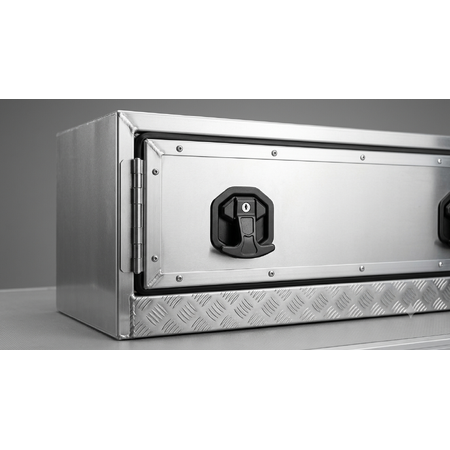
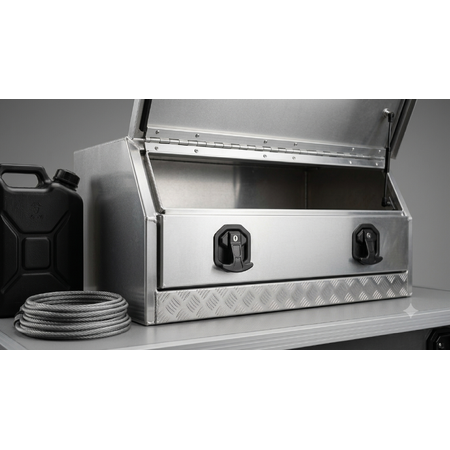
Compression locks, often called whale-tail locks due to their distinctive handle shape, are the most common lock type used on quality aluminium ute toolboxes. As the handle is rotated and pushed down, an internal cam mechanism pulls the door firmly inward against a rubber seal, compressing it to create a tight, weatherproof barrier. This compression action is what sets this lock type apart from simple latch mechanisms, since it actively improves the seal every time the toolbox is closed and locked.
Most compression locks are paired with a barrel or cylinder lock mechanism, allowing them to be secured with a key. Because the compression action itself adds resistance against prying, this lock type is generally considered one of the more secure and weather-resistant ute toolbox lock types available, which is why it has become the standard choice on premium aluminium toolboxes.
T-Handle Locks
T-handle locks are another widely used option, particularly on drawer systems, trundle drawers, and some flat-lid toolboxes. As the name suggests, the lock features a T-shaped handle that rotates to retract an internal latch or bolt, allowing quick, single-handed operation. T-handle locks are valued for their simplicity and speed of use, making them a popular choice for tradies who need frequent, fast access to tools throughout the day.
While T-handle locks are generally reliable, they typically do not compress the door against a seal in the same way compression locks do, meaning weather sealing depends more heavily on the quality of the surrounding rubber gasket and door fit rather than the lock mechanism itself.
Paddle Locks
Paddle locks feature a flush, low-profile design where a flat paddle sits recessed into the toolbox surface, reducing the risk of snagging on clothing, straps, or equipment during loading and unloading. Pressing or lifting the paddle releases an internal latch, and a key cylinder is usually integrated directly into the paddle housing for locking security.
This lock type is often favoured for its clean aesthetic and reduced protrusion, which can be particularly useful on toolboxes mounted in tight spaces or high-traffic areas of a ute tray where a protruding handle might otherwise catch on gear.
Comparing Ute Toolbox Lock Types: Security and Weather Resistance
When evaluating different ute toolbox lock types, security and weather resistance are usually the two most important factors for Australian buyers.
Which Lock Type Offers the Best Security?
Compression locks generally offer the strongest resistance to forced entry, since the locking mechanism is tied directly to the compression action, making it harder to pry the door open even if the lock cylinder itself is tampered with. T-handle and paddle locks can still provide solid security, particularly when paired with hardened steel components and quality cylinder locks, but the compression element found in whale-tail style locks adds an extra layer of physical resistance that other lock types don't inherently provide.
Which Lock Type Handles Australian Weather Best?
Given the range of conditions across Australia, from coastal humidity to dusty outback roads, weather resistance is a major consideration. Compression locks tend to perform best in this area precisely because the locking action itself tightens the seal, actively pushing out moisture and dust with every use. T-handle and paddle locks can still achieve good weather resistance, but this depends more heavily on the surrounding door design and seal quality rather than the lock mechanism providing additional sealing force.
Choosing the Right Lock Type for Your Use Case
Different work environments and usage patterns often call for different ute toolbox lock types, so it's worth thinking through how you'll actually use your toolbox day to day.
For Tradies Needing Frequent Access
If you're in and out of your toolbox multiple times a day, a T-handle lock's quick, single-handed operation can save valuable time on busy worksites. Many trundle drawer systems and quick-access compartments use this lock type for exactly this reason, prioritising speed without significantly compromising security.
For Off-Road and Remote Travel
For 4x4 owners heading off-road or travelling through remote, dusty, or wet conditions, a compression lock's superior sealing performance is usually the better choice, helping protect tools, recovery gear, and camping equipment from dust ingress and water damage over long trips.
For High-Security Storage
If you're storing higher-value tools or equipment, particularly in toolboxes that will be parked in public areas overnight, prioritising a compression lock paired with a hardened steel mechanism and a reputable cylinder lock brand offers the strongest overall theft deterrent among common ute toolbox lock types.
A Note on Additional Security Accessories
Beyond the primary lock mechanism, many owners choose to pair their toolbox with additional locks or security accessories, such as secondary padlocks or hasps, for an added layer of protection on particularly valuable cargo.
Maintaining Your Ute Toolbox Lock
Regardless of which ute toolbox lock type you choose, proper maintenance helps ensure it continues functioning smoothly and securely over time. Lubricating the lock cylinder and moving mechanical components periodically helps prevent stiffness or jamming, particularly in dusty or salty coastal environments where grit and corrosion can accumulate inside the mechanism. It's also worth periodically checking that mounting bolts and hinges remain tight, since a loose door can place uneven stress on the lock mechanism over time.
If a lock does become difficult to operate or shows signs of corrosion, replacing it promptly is generally more cost-effective than risking a failure that leaves your toolbox either inaccessible or, worse, unable to lock securely at all.
How Lock Type Affects Toolbox Installation and Fitment
It's also worth considering how different ute toolbox lock types might influence installation and long-term fitment on your specific vehicle. Compression locks typically require slightly more precise door alignment during manufacturing, since the compression action depends on consistent contact between the door and the seal around its entire perimeter. Quality manufacturers account for this during production, but it's a useful reminder that a well-built toolbox with a compression lock will generally outperform a cheaply made unit, even if both use the same lock style on paper.
T-handle and paddle locks are often slightly more forgiving of minor door misalignment since they rely less on compression to achieve a secure closure, though this can also mean a marginally less airtight seal over the life of the product. For buyers comparing multiple toolbox brands, it's worth asking directly about door tolerance and seal quality alongside the lock type itself, since these factors work together to determine real-world performance rather than the lock mechanism in isolation.
Tips for Getting the Most Out of Your Toolbox Lock
A few simple habits can help extend the working life of whichever lock type you choose. Avoid slamming the toolbox door shut, since repeated forceful closures can gradually stress the lock mechanism and surrounding hinges over time. When parking for extended periods, particularly in coastal or tropical regions, rinsing accumulated salt or grime from the lock area during regular vehicle washing helps prevent long-term corrosion buildup inside the mechanism. Finally, keeping a spare key stored securely away from the vehicle, rather than only relying on a single set, avoids the inconvenience of being locked out if keys are lost or damaged on a job site.
One common mistake is prioritising price over lock quality, since a cheaper toolbox often comes fitted with a lighter-duty lock mechanism that may wear out faster or offer less resistance to forced entry. Another frequent oversight is failing to consider how the lock type interacts with the toolbox's seal design, since even a strong lock cannot fully compensate for a poorly fitted door or worn rubber gasket. It's also worth avoiding lock types that don't suit your actual usage pattern, such as choosing a slower compression lock for a compartment you need to access dozens of times per shift, when a T-handle option might serve you better in that specific scenario.
Conclusion
Understanding the different ute toolbox lock types available today, compression locks, T-handle locks, and paddle locks, makes it much easier to choose a toolbox that matches both your security needs and the conditions you work or travel in. Compression locks remain the go-to choice for most Australian tradies and 4x4 owners thanks to their strong weather sealing and solid security, while T-handle and paddle locks offer faster access and a lower profile for specific use cases. When browsing our full range of ute toolboxes, you'll find quality compression-locked options built to handle harsh Australian conditions. If you have questions about which lock type suits your build, feel free to contact our team for expert advice.
Frequently Asked Questions
Q1: What is the most secure type of ute toolbox lock? Compression locks, often called whale-tail locks, are generally considered the most secure ute toolbox lock type because the locking mechanism actively compresses the door against the seal, adding resistance to both forced entry and weather intrusion.
Q2: Are T-handle locks less secure than compression locks? T-handle locks can still provide solid security, especially with quality cylinder mechanisms, but they don't offer the same compression sealing benefit as whale-tail style locks, which is the main trade-off buyers should weigh.
Q3: Which ute toolbox lock type is best for dusty or off-road conditions? Compression locks generally perform best in dusty or off-road conditions since the compression action tightens the seal each time the toolbox is locked, helping keep dust and moisture out more effectively than other lock types.
Q4: Can I upgrade the lock on my existing ute toolbox? In many cases, yes. Depending on the toolbox design, it's often possible to replace an existing lock with a different type, though it's worth checking compatibility with your specific toolbox model or consulting the manufacturer first.
Q5: How often should I maintain my toolbox lock? Lubricating the lock mechanism every few months, or more often if you work in dusty or coastal environments, helps prevent stiffness and corrosion, keeping the lock operating smoothly and securely for years.