Ute Tray Toolbox: A Complete Buying and Fitting Guide
TL;DR
A ute tray toolbox is a storage unit mounted directly onto or built into a ute's tray, giving tradespeople and 4WD owners a secure, weatherproof place to carry tools and gear. Choosing the right one depends on tray space, weight capacity, material, and how the toolbox needs to work alongside other tray accessories. Getting these details right upfront saves money, protects your gear, and avoids fitment headaches down the track.
Quick Answer
A ute tray toolbox is a storage compartment fitted onto or integrated into a ute's tray, typically made from aluminium or steel, designed to keep tools, equipment, and accessories secure and protected from weather and theft. It differs from a generic under-tray toolbox in that it's specifically shaped and positioned to work with the tray's layout, whether that's under the tray rails, along the side, or across the drawbar. The right choice depends on your tray dimensions, payload limits, and how often you need access to what's stored inside.
Introduction
Anyone who's spent time driving a ute for work knows the tray is prime real estate. Every centimetre matters, and how you organise that space affects your whole workday, from how quickly you can grab a tool to how well your gear survives a rough dirt track.
A ute tray toolbox solves a problem that a lot of tradies and outdoor enthusiasts run into: loose gear rattling around, tools exposed to rain and dust, or valuable equipment sitting in plain sight at a job site. Instead of throwing everything in the tray unsecured, a properly fitted toolbox keeps things organised, protected, and out of sight.
This guide covers what a ute tray toolbox actually is, the different types available, what materials and features matter most, and how to choose one that fits both your tray and your daily workflow without creating fitment or weight problems later.
What Exactly Is a Ute Tray Toolbox?
A ute tray toolbox is a purpose-built storage container designed to sit on, under, or alongside a ute tray. Unlike a generic storage bin you might buy at a hardware store, these toolboxes are shaped and sized specifically to work with common ute tray configurations, whether that's a single cab, dual cab, or extra cab setup.
The core idea is straightforward. Instead of your tools and equipment sitting loose in the tray, exposed to weather and vibration, a toolbox gives them a dedicated, lockable space. Most designs include weather sealing around the lid or door, some form of locking mechanism, and mounting points that align with standard tray bolt patterns or rail systems.
What separates a ute tray toolbox from other storage options is how closely it's matched to the tray itself. A well-designed toolbox doesn't just sit on top of the tray taking up space, it works with the tray's existing structure, often fitting under the tray rails or into a corner that would otherwise go unused.
Common Placements on a Ute Tray
Toolboxes can be positioned in several different spots depending on the tray design and what else needs to fit alongside them. Under-tray toolboxes sit beneath the main tray deck, using space that would otherwise be wasted. Side-mounted toolboxes run along one or both sides of the tray, often paired with a matching unit on the opposite side. Drawbar toolboxes sit at the rear of the tray, near the tow bar, making use of an area that's frequently left empty.
Each placement has its own advantages, and many ute owners end up combining more than one type to maximise their available storage without sacrificing tray space needed for other equipment.
Types of Ute Tray Toolboxes
Not every ute tray toolbox is built the same way, and understanding the main types helps narrow down what actually suits your situation.
Under Tray Toolboxes
These sit underneath the tray itself, mounted between the chassis rails. Because they use space below the tray deck, they don't reduce the usable area on top of the tray, which makes them popular among tradies who need to keep the main tray surface clear for larger equipment or materials.
The trade-off is size. Under tray toolboxes are generally more limited in height and width compared to other styles, since they need to fit within the space between the chassis rails without interfering with suspension components or exhaust systems.
Side Open Toolboxes
Side open toolboxes are mounted along the side of the tray, with access from the side rather than the top. These are convenient for frequently used tools since you don't need to climb onto the tray or reach over the tray walls to access them.
This style works particularly well for tradies who need quick access to hand tools throughout the day, as opening the side door is generally faster than lifting a top lid, especially when the tray is loaded with other materials.
Top Open Toolboxes
As the name suggests, these open from the top and typically sit on the tray floor or along the headboard area. They tend to offer more internal volume than under-tray options, making them suitable for bulkier equipment, though they do take up usable tray space.
Gullwing Toolboxes
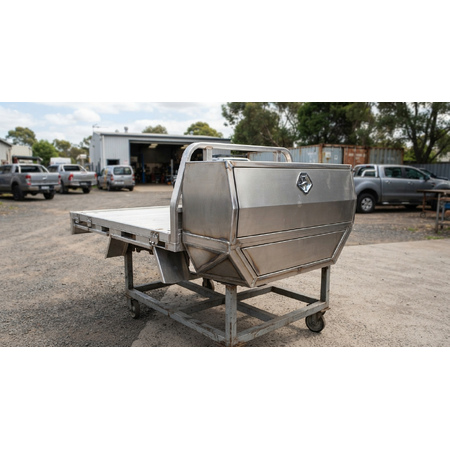
Gullwing toolboxes feature two doors that open upward from a central hinge point, similar to gullwing car doors. This design gives wide access to the entire compartment at once, which is useful for organising and viewing everything stored inside without needing to dig through a narrow opening.
Drawbar Toolboxes
Positioned at the rear of the tray near the tow bar, drawbar toolboxes make use of space that often goes unused, particularly on utes that don't tow trailers regularly. They're generally more compact than other toolbox types but add valuable extra storage without affecting the main tray layout.
Materials Used in Ute Tray Toolbox Construction
The material a toolbox is built from affects its weight, durability, and how it holds up against Australia's varied climate and rough roads.
Aluminium Toolboxes
Aluminium is one of the most common materials for ute tray toolboxes, and for good reason. It offers a strong strength-to-weight ratio, meaning you get solid durability without adding excessive weight to your payload. Aluminium also naturally resists corrosion, which matters for anyone working near the coast or in humid conditions where rust becomes a real concern over time.
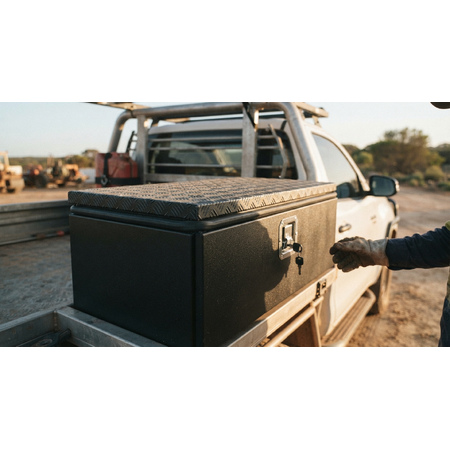
Checker plate aluminium, recognisable by its raised diamond pattern, adds extra scratch resistance and a non-slip surface, which is why it's a popular finish choice for toolbox lids and sides that see regular contact from tools and equipment.
Steel Toolboxes
Steel toolboxes are generally heavier than aluminium equivalents but can offer higher impact resistance in certain situations. The added weight is a genuine consideration for anyone working close to their ute's payload limit, since a heavier toolbox eats into the remaining capacity available for tools, equipment, and passengers.
Steel toolboxes typically require a protective coating, such as powder coating, to prevent rust, and this coating needs to be maintained over time to keep corrosion at bay, particularly around scratches or chips in the finish.
Finish and Coating Considerations
Beyond the base material, the finish applied to a ute tray toolbox affects both appearance and longevity. Powder coating provides a durable, even finish that resists chipping better than standard paint, while raw or brushed aluminium finishes offer a more industrial look that some tradies prefer for its rugged appearance.
Weight Capacity and Payload Considerations
One of the most overlooked aspects of choosing a ute tray toolbox is how it affects your vehicle's overall payload capacity. Every ute has a maximum payload rating, and this includes the toolbox itself, everything stored inside it, plus any other tray accessories, passengers, and fuel.
A heavier toolbox reduces how much you can legally and safely carry elsewhere. This becomes particularly important for tradies who already run canopies, additional storage systems, or heavy equipment like generators and compressors on their tray.
Before purchasing, it's worth calculating your ute's available payload after accounting for passengers and fuel, then checking the toolbox's own weight alongside the expected weight of what you plan to store inside it. Overloading a ute affects handling, braking performance, and can result in fines if it exceeds legal limits, so this calculation is worth doing properly rather than estimating roughly.
Security Features Worth Considering
Since a ute tray toolbox often stores valuable tools and equipment, security is a genuine practical concern, not just an added extra.
Most quality toolboxes come with some form of locking mechanism, ranging from basic key locks to more robust compression latches that pull the lid or door tightly against a weather seal while also securing it against forced entry. Some higher-end options include central locking systems that allow multiple toolboxes on the same tray to lock and unlock together, which is convenient for anyone running several storage units across their setup.
For tradies working in areas with higher theft risk, it's worth considering toolboxes with reinforced hinges and latch points, since these tend to be the weak points targeted during attempted break-ins. Some owners also add supplementary locks or alarm systems, such as motion-triggered alarms, for additional peace of mind when the ute is left unattended overnight.
Weatherproofing and Sealing
Australia's climate ranges from coastal humidity to outback dust and everything in between, which makes weatherproofing an important factor when selecting a ute tray toolbox.
Rubber or foam seals around the lid or door help keep rain, dust, and moisture out of the compartment. Over time, these seals can degrade from UV exposure and general wear, so it's worth checking their condition periodically and replacing them if they become brittle or compressed.
Drainage is another practical detail that's easy to overlook. Some toolboxes include small drainage points that allow any moisture that does get inside to escape rather than pooling at the bottom, which helps prevent rust and mould from developing inside the compartment over time.
Matching a Toolbox to Your Tray Layout
Choosing the right ute tray toolbox isn't just about the toolbox itself, it's about how it fits into your overall tray setup alongside other equipment you already carry or plan to add.
Measuring Available Space
Before buying, measure the actual available space on your tray, taking into account existing equipment like jerry can holders, spare wheel carriers, or a canopy structure. It's easy to underestimate how much space these other accessories take up until you're trying to fit a new toolbox alongside them.
Considering Future Additions
If you're planning to add other tray accessories later, such as a canopy, roof racks, or a dog box, it's worth thinking about how a toolbox purchased now will interact with those future additions. Some toolbox positions, like drawbar units, tend to work well alongside almost any other tray setup, while larger top-open toolboxes might limit your options for adding a canopy later.
Access and Workflow
Think about how often you'll need to access the toolbox and what you'll be storing inside it. Tools used daily are better suited to easily accessible positions like side-open toolboxes, while less frequently used equipment can go into under-tray or drawbar units without creating workflow friction.
Custom Versus Standard Ute Tray Toolboxes
Standard toolbox sizes work well for most common ute models and typical storage needs, but they don't suit every situation. Custom builds become worth considering when you have specific internal fitout requirements, an unusual tray configuration, or need a toolbox to integrate with other custom equipment already on your ute.
Custom ute tray toolboxes allow for tailored internal dividers, drawer systems, or specific mounting points that match your exact tray dimensions. This flexibility comes at a higher price point and typically involves a longer lead time compared to purchasing an off-the-shelf unit, so it generally makes sense to explore standard options first unless your situation genuinely requires a custom solution.
Installation Considerations
Fitting a ute tray toolbox correctly matters just as much as choosing the right one. Poor installation can lead to rattling, water ingress, or in more serious cases, the toolbox coming loose while driving.
Most toolboxes mount using bolts through the tray floor or side rails, and it's important these mounting points are properly sealed to prevent water from entering through the bolt holes. Some installers also add rubber padding or spacers between the toolbox and tray surface to reduce vibration and rattling over rough roads.
For anyone not confident handling this themselves, professional installation is generally worth the cost, particularly for larger or heavier toolbox units where incorrect mounting could pose a genuine safety risk during transport.
Maintaining Your Ute Tray Toolbox
Regular maintenance extends the life of any ute tray toolbox and keeps it functioning properly for years. Cleaning with mild soapy water and a soft cloth helps prevent dirt and grime buildup, particularly around hinges and latch mechanisms where debris can interfere with smooth operation.
Checking seals periodically for wear, lubricating locks and hinges occasionally, and inspecting mounting bolts for tightness after rough drives all help prevent small issues from developing into bigger problems. For aluminium toolboxes, an occasional wax or protective coating can help maintain the finish, while steel toolboxes benefit from checking for any signs of rust starting at chips or scratches in the powder coating.
Conclusion
A ute tray toolbox is one of those accessories that makes a genuine difference to daily usability once it's properly matched to your tray and your work requirements. Getting the size, material, placement, and weight capacity right from the start saves you from costly mistakes and fitment issues later on.
Taking the time to measure your available tray space, calculate your payload limits, and think through how the toolbox will work alongside your current and future equipment tends to result in a setup that serves you well for years rather than one that needs replacing or reworking within the first season of use.
FAQs
What's the difference between an under-tray toolbox and a top-open toolbox?
An under-tray toolbox mounts beneath the tray deck between the chassis rails, preserving the main tray surface, while a top-open toolbox sits on the tray itself and opens from the top, generally offering more internal volume but using up visible tray space.
Is aluminium or steel better for a ute tray toolbox?
Aluminium generally offers a better strength-to-weight ratio and natural corrosion resistance, making it lighter on payload, while steel can offer higher impact resistance but adds more weight and typically requires ongoing rust protection.
How does a ute tray toolbox affect my payload capacity?
The toolbox's own weight, along with everything stored inside it, counts toward your ute's total payload limit, so heavier toolboxes reduce the remaining capacity available for other equipment, tools, and passengers.
Can I fit a ute tray toolbox alongside a canopy?
In many cases, yes, particularly with drawbar or under-tray toolboxes, though it depends on the specific canopy design and available tray space. It's worth planning both together if you know you'll want a canopy in the future.
Do ute tray toolboxes need regular maintenance?
Yes. Checking seals, lubricating locks and hinges, cleaning regularly, and inspecting mounting bolts helps prevent issues like water ingress, rust, or loose fittings from developing over time.