Canopy Toolbox Guide: Everything Ute Owners Need to Know Before Buying
TL;DR
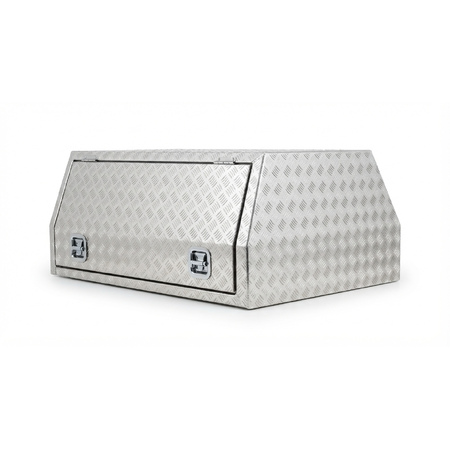
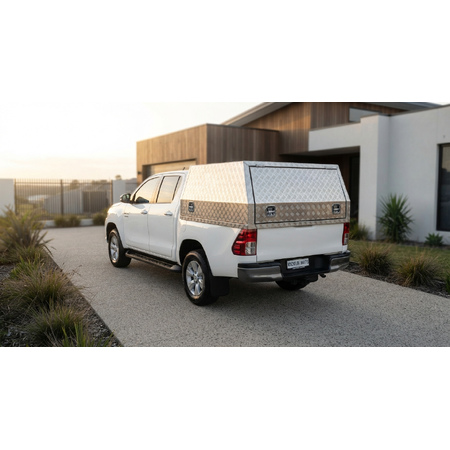
A canopy toolbox is a secure storage unit built into or mounted alongside a ute canopy, designed to organise tools, equipment, and gear while keeping everything protected from weather and theft. Choosing the right canopy toolbox depends on material, mounting style, size, and how you actually use your ute day to day. This guide walks through everything from how a canopy toolbox works to the most common mistakes buyers make when choosing one.
Quick Answer
A canopy toolbox is a lockable storage compartment fitted to a ute canopy, typically made from aluminium or steel, used to keep tools, equipment, and accessories secure and organised while travelling or working on-site. It can be mounted internally within the canopy, suspended as a shelf, or built as part of the canopy structure itself. The right choice depends on your ute's tray size, the type of gear you carry, and whether you prioritise weatherproofing, security, or maximum storage capacity.
Introduction
For tradies, farmers, and weekend adventurers alike, a ute is only as useful as its storage setup. Loose tools rattling around in the tray, exposed to rain and dust, can get damaged, misplaced, or stolen in a matter of minutes.
This is where a canopy toolbox earns its place. It turns a bare canopy into an organised, secure workspace on wheels, keeping everything from power drills to spare parts exactly where you left them.
In this guide, we will cover what a canopy toolbox actually is, how it works with your existing canopy setup, the different types available, and the key factors to weigh before buying one. Whether you are outfitting a work ute or upgrading your weekend touring rig, this article will help you make a confident, informed decision.
What Is a Canopy Toolbox?
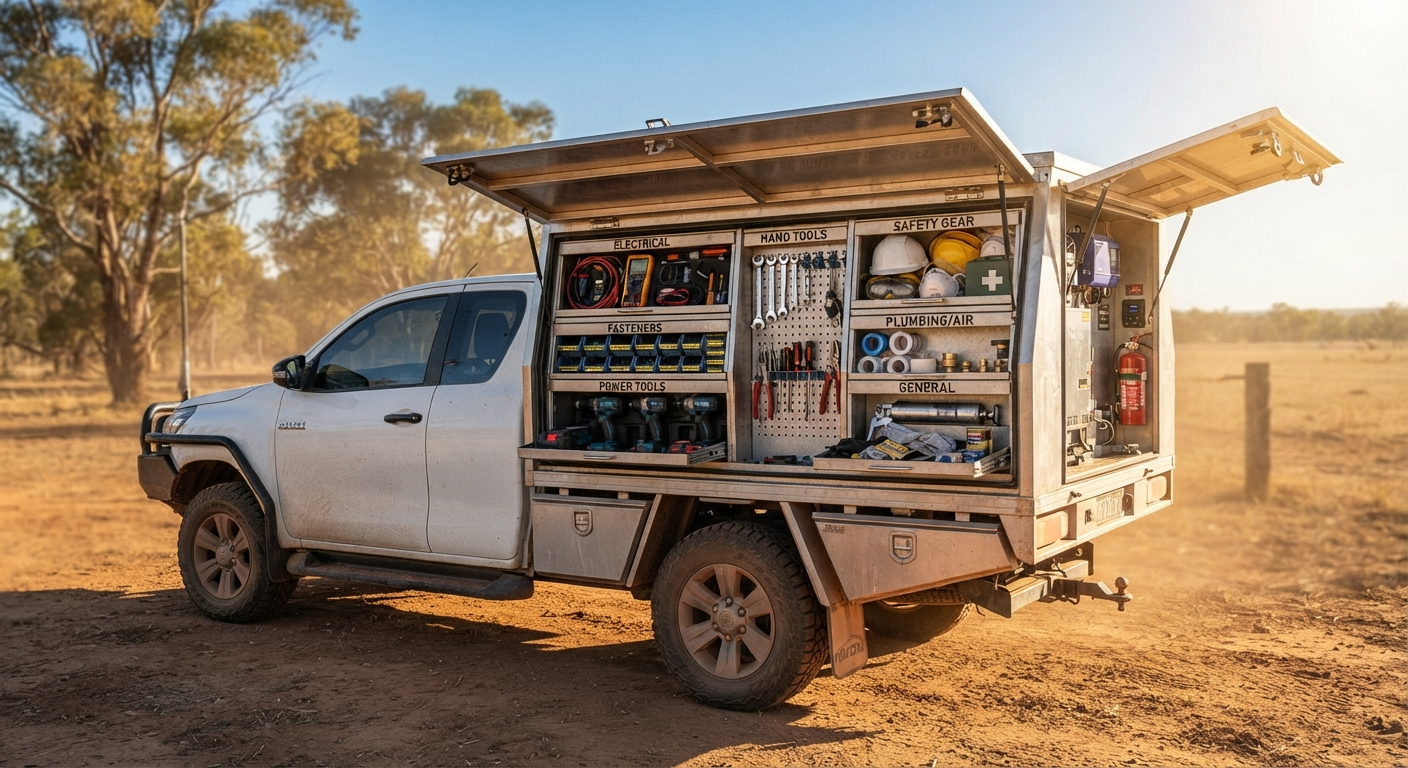
A canopy toolbox is a storage unit designed specifically to work alongside or within a ute canopy, providing a secure, enclosed space for tools and equipment. Unlike a standalone under-tray toolbox, a canopy toolbox is typically positioned inside the canopy itself, either as a suspended shelf, a drawer system, or a fixed compartment along the canopy walls.
The purpose is straightforward: keep everything organised, protected from the elements, and locked away from opportunistic theft, all while making the most of the available space inside the canopy structure.
Most units are constructed from aluminium or steel, chosen for their durability and resistance to the harsh conditions Australian utes regularly face, from dusty outback tracks to coastal humidity.
How Does a Canopy Toolbox Work With Your Canopy?
A canopy toolbox is designed to complement the existing canopy rather than replace it. While the canopy itself provides overall weather protection and security for the tray, the toolbox adds an additional layer of organisation and specific storage for smaller items that would otherwise get lost in a large open space.
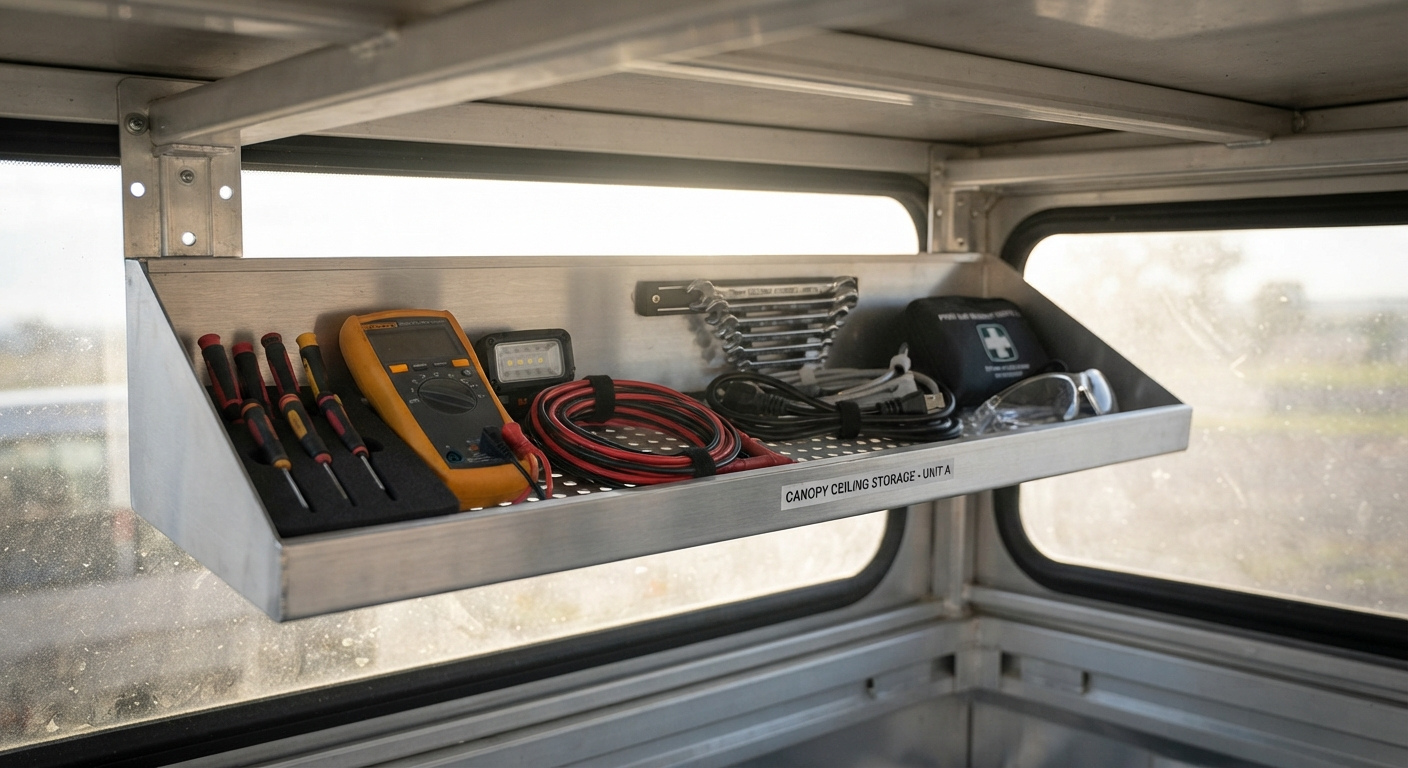
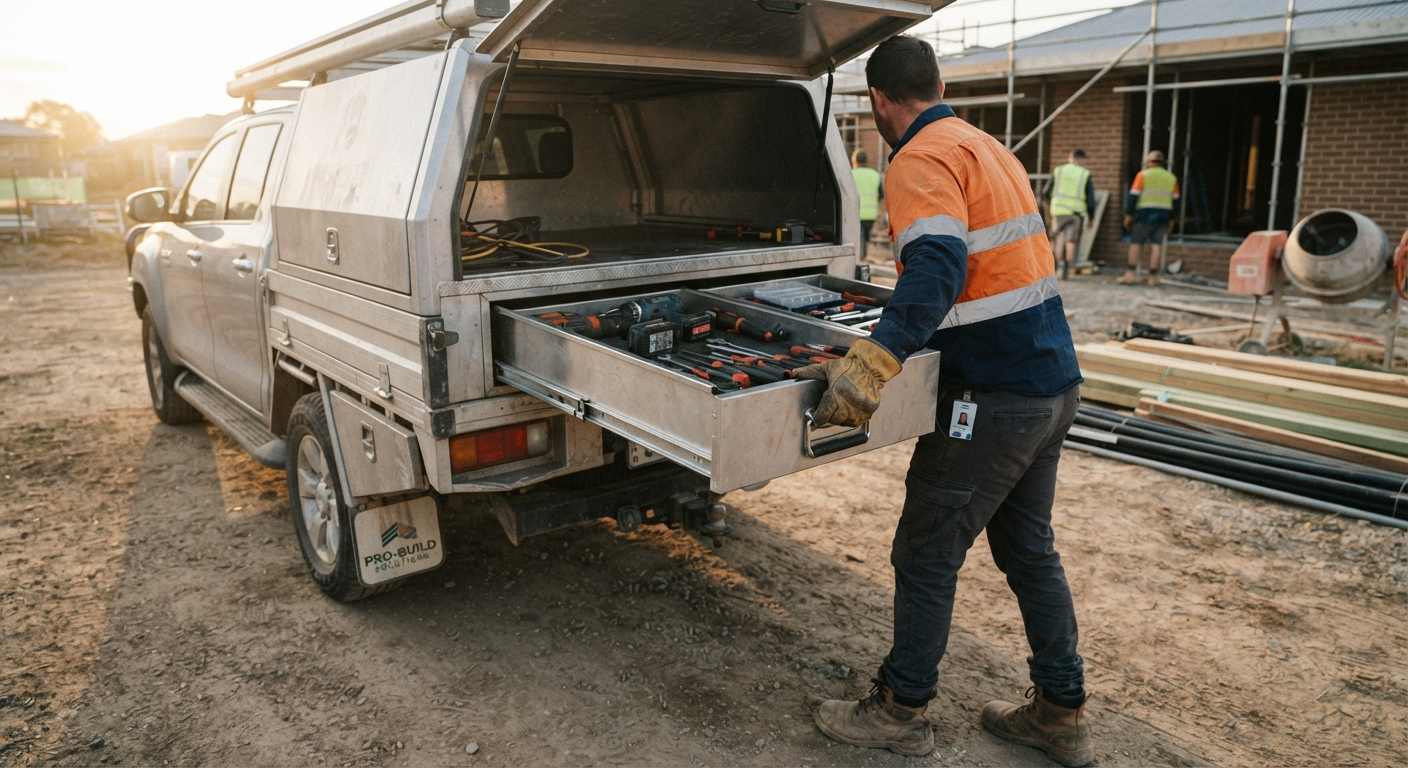
Many setups use a canopy suspended shelf, which mounts to the ceiling of the canopy interior, freeing up floor space for larger equipment while keeping smaller tools accessible from above. Others integrate drawer systems directly into the canopy toolbox structure, allowing tools to be pulled out and accessed from the rear or side of the vehicle without needing to climb into the tray.
Key Components of a Canopy Toolbox Setup
Regardless of the specific configuration, most canopy toolbox systems share a few common elements:
- Frame structure – the main body, typically aluminium or steel, that holds the toolbox shape
- Locking mechanism – secures the compartment against theft and accidental opening while driving
- Mounting brackets – attach the toolbox securely to the canopy's internal frame
- Drawer or shelf inserts – organise tools by size and type for easier access
- Weather seals – prevent dust and moisture from entering the compartment
- Handles or latches – allow quick, secure access when needed on-site
Understanding these components helps buyers evaluate build quality, since a poorly sealed or weakly mounted canopy toolbox can shift during transit or let in moisture over time.
Types of Canopy Toolbox Options
Not every canopy toolbox is built the same way, and the right choice depends on your specific storage needs and how your ute is used.
Suspended Canopy Shelf Toolboxes
A suspended canopy shelf mounts to the interior roof of the canopy, hanging above the main tray floor. This style is particularly popular among tradies who need to store lightweight tools, cables, or smaller equipment without sacrificing floor space for bulkier items like generators or ladders.
Drawer System Toolboxes
Drawer-based canopy toolbox systems slide out from the rear or side of the canopy, offering easy access without requiring the user to climb inside the tray. These are especially useful for frequently accessed tools, since everything stays visible and organised in labelled compartments rather than buried under other gear.
Fixed Wall-Mounted Toolboxes
Fixed units attach directly to the interior walls of the canopy, providing a permanent storage solution that doesn't take up floor space in the same way a freestanding box might. These are often chosen for specialised equipment that needs a dedicated, unchanging location within the canopy.
Under-Tray Combination Setups
Some ute owners pair a canopy toolbox with additional under-tray toolboxes mounted beneath the vehicle, maximising total storage capacity across both the canopy interior and the space underneath the tray itself. This combination approach works well for those who need extensive storage for both daily tools and less frequently used equipment.
Key Factors to Consider Before Buying a Canopy Toolbox
Choosing the right canopy toolbox involves more than picking whatever fits in the available space. Several practical and structural factors should guide the decision.
Material Choice
Aluminium remains the most popular material for a canopy toolbox thanks to its lightweight properties and natural resistance to rust, making it ideal for the varied Australian climate. Steel options offer greater strength and impact resistance but add noticeably more weight, which can affect fuel efficiency and payload capacity over time.
Size and Storage Capacity
The right size depends entirely on what you actually need to carry. A tradie hauling power tools daily will need significantly more storage than someone using their ute primarily for weekend camping trips. Measuring your canopy's interior dimensions before purchasing helps avoid buying a toolbox that either wastes space or simply doesn't fit.
Locking and Security Features
Since tools and equipment represent a significant investment, security should be a top priority when selecting a canopy toolbox. Look for units with robust locking mechanisms, ideally ones that integrate with your canopy's overall security system rather than functioning as a separate, potentially weaker point of entry.
Weatherproofing
Australian conditions range from scorching heat to sudden downpours, so a canopy toolbox needs proper sealing to keep dust, rain, and moisture away from stored equipment. Rubber gaskets around doors and drawers, along with quality powder coating, significantly extend the lifespan of both the toolbox and whatever is stored inside it.
Mounting Compatibility
Not every canopy toolbox fits every canopy design. Before purchasing, confirm that the mounting system is compatible with your specific canopy's internal frame, whether that means suspended shelf brackets, wall-mount points, or drawer slide rails.
Weight and Payload Considerations
Adding a canopy toolbox increases the overall weight of your setup, which can affect your ute's payload capacity. It's worth checking your vehicle's specifications to ensure the combined weight of the canopy, toolbox, and stored equipment stays within legal and safe limits.
Canopy Toolbox vs Standalone Ute Toolboxes
Understanding how a canopy toolbox differs from a standalone toolbox helps clarify which option suits your setup best.
A standalone ute toolbox typically mounts directly to the tray itself, either under the tray or as a top-open unit sitting on the tray surface. These work well for utes without a canopy, offering straightforward storage without requiring additional overhead structure.
A canopy toolbox, by contrast, is specifically designed to integrate with an existing canopy, taking advantage of the enclosed space the canopy already provides. This generally offers better overall weather protection and security, since the canopy itself acts as an additional barrier against the elements and opportunistic theft, on top of whatever locking mechanism the toolbox itself includes.
For ute owners who already have a canopy fitted, adding a properly integrated canopy toolbox often makes more sense than installing a separate standalone unit, since it maximises the use of existing enclosed space rather than adding bulk to the exterior of the vehicle.
Common Applications for a Canopy Toolbox
A canopy toolbox serves a wide range of purposes depending on the owner's profession and lifestyle.
Tradesman and Work Utes
Tradies rely heavily on organised, secure storage to protect expensive power tools and equipment between job sites. A well-designed canopy toolbox allows quick access to frequently used items while keeping everything locked away from theft during unattended periods on-site.
Farming and Rural Use
Farmers often use a canopy toolbox to store hand tools, fencing equipment, and other gear needed for daily property maintenance, benefiting from the added protection against dust and rough terrain common in rural settings.
Touring and Camping Setups
Weekend adventurers and long-distance tourers frequently fit a canopy toolbox to organise camping gear, recovery equipment, and spare parts, keeping everything accessible and protected during extended trips through varied Australian terrain.
Fleet and Commercial Vehicles
Businesses running fleets of utes often standardise canopy toolbox setups across their vehicles, ensuring consistent organisation and security for company tools and equipment regardless of which vehicle a worker is assigned to on a given day.
Installation Considerations for a Canopy Toolbox
While many canopy toolbox units can be installed by handy owners, professional installation is often recommended, particularly for more complex drawer systems or setups requiring precise mounting to the canopy's internal frame.
Proper installation ensures the toolbox remains securely fixed during transit, preventing shifting or rattling that could damage both the toolbox and the surrounding canopy structure. It also ensures weather seals are correctly fitted, since improperly installed units can develop gaps that allow moisture or dust infiltration over time.
Most reputable suppliers offer installation services alongside the sale of a canopy toolbox, and choosing this option can provide peace of mind that the unit has been fitted correctly from the outset.
Maintenance Tips for a Long-Lasting Canopy Toolbox
Like any piece of equipment exposed to demanding outdoor conditions, a canopy toolbox benefits significantly from regular maintenance.
Periodically inspecting weather seals for wear or damage helps catch potential moisture problems before they affect stored equipment. Lubricating locks, hinges, and drawer slides prevents stiffness or seizing, particularly important for units used frequently in dusty or sandy environments.
Cleaning the toolbox interior regularly, especially after trips involving mud, sand, or water crossings, helps prevent corrosion and keeps the unit functioning smoothly over the long term. For aluminium units, occasional inspection for any signs of denting or structural stress ensures the toolbox continues providing reliable protection for years of use.
Common Mistakes to Avoid When Choosing a Canopy Toolbox
Many ute owners make avoidable mistakes when selecting a canopy toolbox, often leading to disappointing results or unnecessary additional costs.
One frequent error is underestimating the space needed for actual daily use, resulting in a toolbox that quickly becomes cluttered or insufficient as equipment needs grow. Another common mistake involves ignoring weight limits, adding a heavy toolbox without considering the impact on overall payload capacity, which can lead to legal and safety issues down the line.
Some buyers also overlook compatibility with their specific canopy model, only to discover after purchase that the mounting system doesn't align properly with their existing setup. Finally, choosing the cheapest available option without considering material quality or weatherproofing often results in premature wear, corrosion, or security vulnerabilities that end up costing more in replacement or repair down the track.
Why a Quality Canopy Toolbox Matters for Long-Term Value
Investing in a well-built canopy toolbox pays off significantly over time, both in terms of protecting expensive tools and equipment and in maintaining the overall value of your ute setup.
A poorly made unit that rusts, seizes, or fails to keep out moisture can lead to damaged tools, lost productivity, and ultimately the cost of replacing the toolbox itself sooner than expected. A quality canopy toolbox, properly maintained, can last for many years, providing consistent, reliable storage regardless of the conditions it faces.
For businesses running fleets, standardising on quality canopy toolbox units across all vehicles also simplifies maintenance and replacement processes, since consistent hardware means technicians and staff already know how each system works without needing to learn multiple different configurations.
Conclusion
A canopy toolbox transforms the interior of a ute canopy into an organised, secure, and weatherproof storage solution, whether you're a tradie hauling tools daily, a farmer managing rural equipment, or a weekend adventurer heading off the beaten track. Choosing the right setup comes down to understanding your specific storage needs, the material and security features that matter most to you, and ensuring proper compatibility with your existing canopy.
Rather than focusing solely on price, prioritising build quality, weatherproofing, and secure mounting will ensure your canopy toolbox delivers reliable performance for years to come. A well-chosen and properly maintained canopy toolbox ultimately protects both your equipment and your investment in your ute setup as a whole.
Frequently Asked Questions
1. What is the difference between a canopy toolbox and a standalone ute toolbox?
A canopy toolbox is designed to integrate with an existing canopy, using the enclosed space it already provides, while a standalone toolbox mounts directly to the tray and works independently of any canopy.
2. What material is best for a canopy toolbox?
Aluminium is generally preferred for its lightweight, rust-resistant properties, though steel options offer greater impact resistance for those who prioritise durability over weight savings.
3. Can a canopy toolbox be installed on any canopy?
Not always. Compatibility depends on the canopy's internal frame and mounting points, so it's important to confirm the toolbox matches your specific canopy model before purchasing.
4. Does adding a canopy toolbox affect my ute's payload capacity?
Yes, any added toolbox increases overall weight, so it's worth checking your vehicle's payload specifications to ensure the combined weight of the canopy, toolbox, and equipment stays within safe and legal limits.
5. How do I keep my canopy toolbox from rusting or corroding?
Regular cleaning, inspecting weather seals for wear, and choosing a quality aluminium or properly coated steel unit all help prevent rust and corrosion over the long term, especially in humid or coastal environments.