Flat Plate Under Tray Toolbox: A Practical Buyer's Guide for Ute Owners
TL;DR
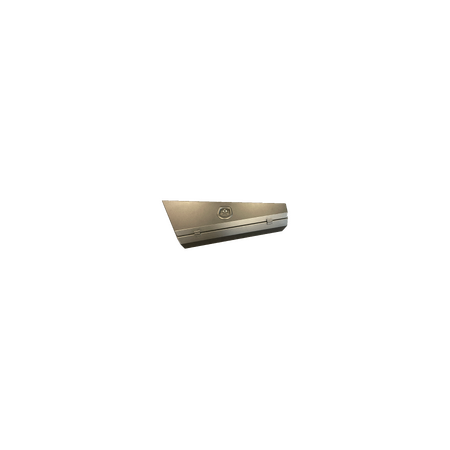
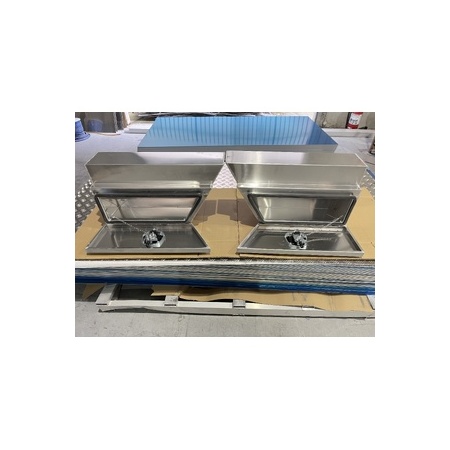
A flat plate under tray toolbox is a lockable aluminium box fitted beneath a ute tray and made from smooth, flat sheet instead of raised checker plate. It uses the unused space under the deck, keeps the tray clear and gives the ute a clean, modern look. Choose one by checking size, fitment, weight, sealing and finish. This guide explains how it compares with other styles and what to confirm before you buy.
Quick Answer
A flat plate under tray toolbox is a storage box mounted under a ute tray and made from smooth, flat aluminium sheet. It holds tools, straps and small gear without using deck space. Compared with checker plate, the flat surface looks sleeker and is generally easier to paint or powder coat, though it can show scratches more readily. To choose one, measure the space under your tray, check suspension and exhaust clearance, and confirm the box suits your payload and security needs.
Introduction
Walk around any worksite car park and you will spot the same thing on plenty of utes. Under the tray, just behind the rear wheels, sit two neat metal boxes.
Those boxes exist for a simple reason. The deck of a ute is prime real estate, and nobody wants to give it up to jacks, ratchet straps and tool pouches. The space underneath is free, so smart owners use it.
A flat plate under tray toolbox is one of the most popular ways to do that. It looks tidy, it suits modern trays, and it comes in a range of sizes.
Still, not every box suits every ute. A poor fit can rub on tyres, fight with the exhaust or eat into your payload. This guide covers what a flat plate under tray toolbox is, how it differs from other styles and what to check before you spend any money.
What Is a Flat Plate Under Tray Toolbox?
A flat plate under tray toolbox is a lockable storage box designed to sit under the deck of a ute tray. The "flat plate" part refers to the surface of the metal. It is smooth, flat sheet, not the raised diamond pattern you see on checker plate.
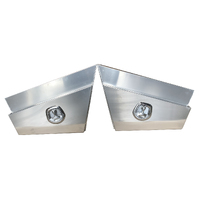
Most are made from aluminium. They are usually sold as a pair, one for each side of the vehicle, although some suppliers also sell single boxes.
Where it sits
The box mounts to the underside of the tray, in the space between the chassis rails and the outer edge of the deck. It usually sits behind the rear wheels, where there is more room, and it opens from the side or rear.
Some designs are straight-sided. Others are tapered, which means they narrow towards the rear. Both can be made in flat plate.
What "flat plate" actually means
The term describes the finish of the sheet. Flat plate is plain and smooth. Checker plate has a raised pattern designed to add grip and hide wear.
On a flat plate under tray toolbox, the smooth surface gives a cleaner, more uniform appearance. That is the main reason many owners prefer it.
Why Ute Owners Choose a Flat Plate Under Tray Toolbox
People buy these boxes for practical reasons first and looks second. Still, both matter.
It frees up deck space
Every item you store under the tray is one less thing on the deck. A flat plate under tray toolbox gives you a place for small, heavy or messy items so the deck stays clear for real loads.
This matters most on shorter trays, where deck space is already limited.
It keeps tools secure and out of sight
Tools in an open tub or on a deck invite theft. A closed box with a proper lock is out of sight and harder to get into.
No storage is theft-proof, but a locked flat plate under tray toolbox is a sensible layer of security.
It protects gear from the elements
Straps, recovery gear and hand tools last longer when they stay dry and clean. A well-sealed box keeps out much of the dust, mud and rain that a ute collects on the road.
Sealing quality varies between products, so it is worth checking the seals and door fit before you buy.
It suits modern trays and canopies
A flat plate under tray toolbox pairs neatly with a flat deck tray, and it can match a canopy built from the same material. The result is a consistent look from front to back.
It is easy to finish
The smooth surface generally takes paint and powder coating well. If you want the box to match your ute or your tray, a flat plate design gives a uniform base to work with.
Flat Plate vs Checker Plate Under Tray Toolbox
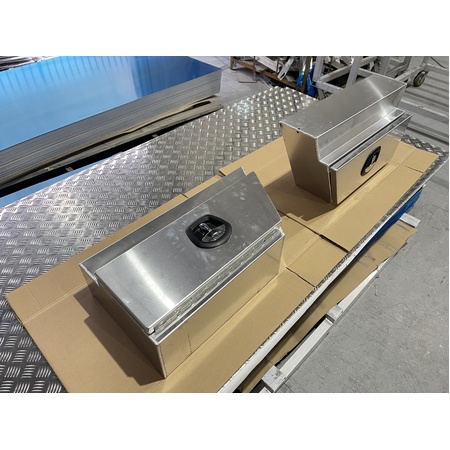
This is one of the most common questions buyers ask. Both options are made from aluminium, and both do the same job. The difference is mostly about surface and style.
| Feature | Flat plate | Checker plate |
|---|---|---|
| Surface | Smooth, plain sheet | Raised diamond pattern |
| Appearance | Sleek, modern, uniform | Traditional, rugged |
| Scratch visibility | Can show marks more easily | Tends to hide wear better |
| Grip | Less textured | More textured |
| Paint and coating | Generally easier to finish evenly | Pattern can show through coating |
| Cleaning | Smooth surface wipes clean | Pattern can trap dirt |
Neither is better in every case. If you want a clean, factory-style look, a flat plate under tray toolbox is a strong choice. If you expect a lot of knocks and scrapes, checker plate may hide the wear better.
Think about how you use the ute. A site vehicle that gets scraped daily may suit checker plate. A ute that is also the family car may look better with flat plate.
Flat Plate vs Tapered Under Tray Toolboxes
Shape is a separate question from surface. Many tapered boxes are made from flat sheet, so you can combine both features.
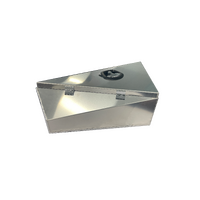
A straight-sided box offers the most internal volume for its length. A tapered box narrows towards the rear, which improves the departure angle and gives a sportier shape.
If you drive off-road, a tapered flat plate under tray toolbox may help the rear clear obstacles more easily. If you mostly work on sealed roads and need maximum storage, a straight design often makes more sense.
Ask the supplier for internal dimensions as well as external ones. The usable space inside a tapered box can be noticeably smaller than the length suggests.
Why Aluminium Is the Usual Material
Most flat plate under tray toolboxes are made from aluminium, and there are good reasons for that.
Aluminium is much lighter than steel for the same size. On a modern dual cab, where payload is limited, that saving counts. It also resists rust naturally, which helps in coastal areas and wet climates.
Steel can be tougher against impact and is often cheaper, but it needs good coatings to prevent corrosion and adds more weight.
Sheet thickness
Thickness affects strength and weight. Thinner sheet is lighter, but it can flex or dent more easily. Thicker sheet is stronger but heavier.
Some suppliers suggest thinner sheet for small under tray boxes and thicker sheet for larger boxes. Ask what thickness is used on the box you are considering, and whether it suits the size and the way you work.
Welds and seams
Good welding matters as much as the material. Clean, continuous welds help keep out water and dust, and they add strength at the corners. Check the seams when you inspect a box in person, or ask for close-up photos.
Choosing the Right Size
Size is where most buyers get stuck, because a flat plate under tray toolbox has to fit the space under your specific tray.
Common size ranges
Sizes vary widely. Suppliers typically list boxes by length, width and height in millimetres. Shorter boxes of around 600 mm suit tight spaces, while longer ones of 900 mm or more use more of the available room.
Do not buy on length alone. Width and height decide whether the box clears the chassis, the exhaust and the suspension.
How to measure
Measure the space from the rear of the cab or the end of the wheel arch to the back of the tray. Then measure the clear width between the chassis rail and the outer edge of the deck, and the vertical gap from the underside of the tray to the lowest point you want the box to reach.
Write the numbers down and compare them with the box dimensions. Leave a margin for brackets, hinges and door swing.
Check the door swing
A box can fit perfectly and still be annoying to use if the door hits a bumper, a tow bar or a mudguard. Check how far the door opens and whether the lid or door has room to move.
Ask for a fitment confirmation
Send your ute's make, model, year, cab type and tray details to the supplier. A reputable supplier will confirm whether a particular flat plate under tray toolbox suits your setup, or suggest an alternative.
Fitment Checks Before You Buy
Fitment is where problems tend to appear. A few extra minutes spent here can save a lot of frustration.
Suspension travel
Your suspension moves up and down as you drive. A box that looks fine on level ground can hit a tyre or wheel arch when the suspension compresses.
Check the clearance at full suspension compression and at full droop. This matters most if you carry heavy loads or drive on rough tracks.
Exhaust and fuel components
Under a ute, there are pipes, tanks and wiring that must stay clear. Keep the box away from hot exhaust parts and from anything that could be rubbed or damaged.
If you are unsure what sits under your tray, a qualified installer can check before mounting.
Spare wheel and recovery points
Some utes carry the spare wheel under the tray. Others have recovery points or tow bar fittings in the area where you might want a box. Make sure the box does not block access to any of them.
Tow bar and rear accessories
A tow bar, a step or a bike rack can interfere with a box or its door. Mention these when you enquire so the supplier can advise.
Ground clearance and departure angle
A box that sits low reduces ground clearance. For off-road use, keep the lowest point of the flat plate under tray toolbox higher than the lowest point of the rest of the vehicle where possible.
A tapered shape can help with departure angle, but check the numbers rather than relying on appearance.
Weight and Payload Considerations
Weight is an issue every ute owner should think about, even with small boxes.
Every ute has a Gross Vehicle Mass, which is the maximum the vehicle can weigh when fully loaded. Payload is what remains after you subtract the vehicle's own weight.
A flat plate under tray toolbox adds its own weight, and then whatever you put inside adds more. Two boxes full of tools can use a noticeable share of a dual cab's payload.
Keep heavy items low and central
Where you put weight matters too. Heavy gear stored low and close to the rear axle is generally better than heavy gear stored high or far back.
Under tray storage helps here, because the boxes sit low. Still, check your vehicle's manual for rear axle limits.
Weigh the loaded vehicle
If your setup is close to its limits, visit a weighbridge after fit-out to see the real figures. It is a simple habit that avoids guesswork.
For specific limits and legal requirements, check your vehicle manual and speak with a qualified professional.
Security, Locks and Seals
A box is only as good as its locks and seals.
Locks
Look for sturdy, lockable latches that sit flush or are shielded from tampering. Cheap latches can be easy to pry or break.
Some owners fit extra locks or use keyed-alike sets across several boxes so they carry fewer keys.
Hinges and door fit
Strong, continuous hinges spread the load and resist forcing. Check that the door lines up evenly and closes without gaps.
Seals
Rubber or foam seals around the opening help keep dust and water out. Inspect them for gaps or poor adhesion, since worn seals are a common weak point.
Even a well-sealed flat plate under tray toolbox is not guaranteed to stay perfectly dry in heavy rain or water crossings, so keep sensitive items in waterproof bags.
What Should You Store in a Flat Plate Under Tray Toolbox?
The best contents are items that are small, heavy or messy, and that you need to reach often.
Good candidates
- Ratchet straps and tie-downs
- Recovery gear such as shackles and snatch straps
- Hand tools and tool rolls
- Jumper leads and tyre repair kits
- Cleaning supplies and rags
- Fasteners and consumables
Items to be careful with
Avoid storing fuel, gas bottles or other hazardous materials in a closed box unless it is designed for that purpose. Check local rules for storing flammable items.
Also avoid overloading the box. Heavy items can sag the floor or strain the mounts, so spread weight evenly.
Installation Overview
Installation depends on the box, the tray and the vehicle, so always follow the supplier's guidance.
Most boxes mount to the underside of the tray with brackets or directly to the tray's frame. Some trays come with under tray toolboxes already fitted, which can be easier than retrofitting.
Retrofit vs factory-fitted
If you already own a tray, you can usually add a flat plate under tray toolbox later, provided there is enough space and a suitable mounting point. If you are buying a new tray, consider ordering it with the boxes included so the fit is planned from the start.
Use a qualified installer when unsure
Mounting a box involves drilling, bolting and sometimes modifying brackets. Poor mounting can lead to rattles, leaks or even a box coming loose.
If you are not confident, use an experienced installer. They can also check clearance, torque the fasteners correctly and confirm the setup is safe.
Check local rules
Vehicle modification rules differ across Australia. A tray or box can fall under them in some cases. Check with your state road authority or a qualified professional to see what applies.
Pairing With a Tray, Canopy and Other Storage
A flat plate under tray toolbox rarely works alone. It is part of a wider storage plan.
With a ute tray
A flat deck tray with under tray boxes is a common combination. The boxes handle small gear, and the deck takes bulkier loads.
With a canopy
If you fit a canopy, the under tray boxes can hold items you do not want inside the canopy, such as dirty recovery gear or greasy tools. This keeps the canopy interior clean and organised.
With a trundle drawer or side boxes
Some owners combine under tray boxes with a trundle drawer or larger side toolboxes. Each handles a different job. Under tray boxes carry daily small items, while larger boxes carry bulky tools.
Planning ahead
Think about the whole layout before ordering. A well-planned system uses each space for what it does best, instead of cramming everything into one box.
Colour and Finish Options
Appearance is part of the appeal of a flat plate under tray toolbox, so finish deserves a look.
Natural aluminium
Bare aluminium has a bright, metallic look. It resists rust, but it can show scratches and marks over time.
Black and coloured finishes
Powder coating or paint lets you match the box to your tray, canopy or ute. Black is popular because it looks tidy and hides some marks.
Quality of coating
Ask how the coating is applied and prepared. A good finish needs proper surface preparation, or it may chip or peel. Check warranty terms for coatings as well.
Maintenance and Care
A flat plate under tray toolbox needs very little care, but a few habits help it last.
Wash it regularly, especially after beach or off-road trips. Salt, mud and dirt can build up and affect finishes and seals.
Lubricate hinges and locks occasionally. Check that fasteners are tight, since vibration can loosen them over time.
Inspect the seals and the door fit. If you see gaps or wear, replace the seals before water gets in.
Touch up scratches in the coating early, particularly on painted or powder-coated boxes. This helps prevent corrosion and keeps the finish looking neat.
If you notice cracks, loose mounts or odd noises, get the box checked rather than ignoring it.
What Affects the Price?
Prices vary by supplier and by product, so it helps to understand what drives the cost.
Size is the first factor. Larger boxes use more material and labour.
Material thickness and build quality also matter. Thicker sheet and better welding usually cost more.
Finish plays a role too. Bare aluminium costs less than a custom powder-coated colour.
Features such as better locks, extra seals and internal dividers add to the price. Brand reputation, warranty and after-sales support also count.
Installation is a separate cost if you use a professional. It can add to the total, but it often prevents fitment mistakes.
Compare the full cost, including freight and fitting, not just the sticker price. Ask about warranty terms and what they cover.
Common Mistakes to Avoid
Most problems with a flat plate under tray toolbox come from a handful of errors.
One is buying without measuring. A box that looks right in photos may not clear your chassis or exhaust.
Another is ignoring suspension travel. Clearance on level ground tells you little about what happens on a bumpy road.
A third is choosing on price alone. Thin sheet, weak welds and poor seals can cost more in the long run.
A fourth is forgetting about door swing. A box that is hard to open will frustrate you every day.
A fifth is overloading. Heavy gear can strain the box and eat into your payload.
Finally, some owners treat the box as an afterthought. Planning storage as part of the whole tray and canopy setup gives a cleaner, more useful result.
How to Choose the Right Flat Plate Under Tray Toolbox
If you want a simple process, follow these steps in order.
First, define your use. Think about what you will store and how often you will reach for it.
Second, measure the space under your tray. Record length, width, height and any obstructions.
Third, check clearance for suspension, exhaust, spare wheel and tow bar.
Fourth, compare materials, sheet thickness and welding quality.
Fifth, look at locks, seals and door design.
Sixth, consider finish and how it matches your ute or tray.
Seventh, confirm weight and think about payload.
Finally, ask the supplier to confirm fitment for your exact ute and tray. A good supplier will welcome the question.
Conclusion
A flat plate under tray toolbox offers a tidy, practical way to use space that would otherwise go to waste. It keeps small gear secure, frees up the deck and gives the ute a clean look that suits modern trays and canopies.
The best results come from careful planning. Measure the space, check clearance, think about weight and choose locks and seals you trust. Finish and style matter, but they should follow fitment and function.
Take your time, ask detailed questions and compare options. A box that fits well and works smoothly will earn its place every day, long after the purchase is forgotten.
Frequently Asked Questions
What is a flat plate under tray toolbox?
It is a lockable storage box mounted under a ute tray and made from smooth, flat aluminium sheet. It stores tools and gear without taking up deck space.
What is the difference between flat plate and checker plate under tray toolboxes?
Flat plate has a smooth, plain surface that looks sleek and is generally easier to paint. Checker plate has a raised diamond pattern that tends to hide scratches and wear better. Both do the same job.
Will a flat plate under tray toolbox fit my ute?
Fit depends on your tray, chassis, suspension travel, exhaust and tow bar, not just the vehicle model. Measure the space and ask the supplier to confirm fitment for your exact setup.
Are flat plate under tray toolboxes waterproof?
They are designed to keep out much of the dust and rain, but sealing quality varies. For heavy rain, water crossings or sensitive items, use waterproof bags inside the box.
Can I install a flat plate under tray toolbox myself?
Some people do, but mounting involves drilling and bolting under the vehicle. If you are unsure, use an experienced installer, and check your local modification rules before fitting.